

What's Happening?
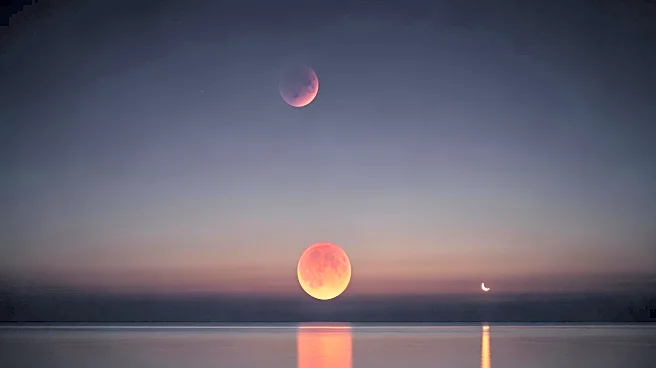
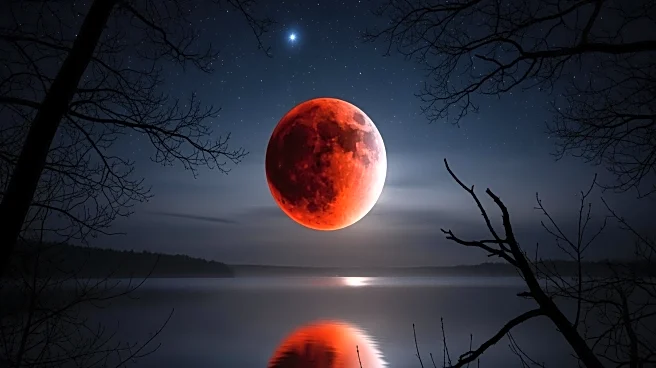
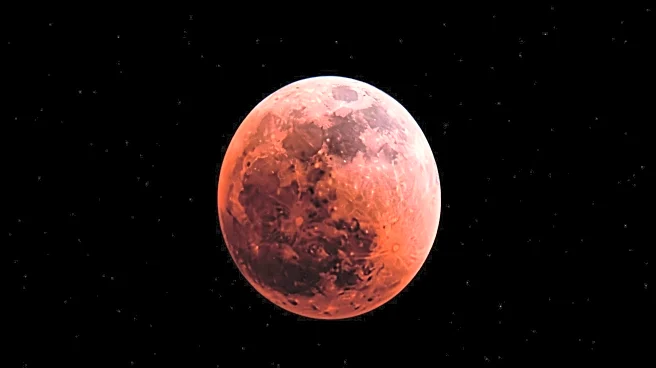
On March 3, 2026, a total lunar eclipse, known as a 'blood moon,' will be visible across the United States. This celestial event will last for 5 hours and 38 minutes, with the moon appearing deep red-orange as it passes fully into Earth's shadow. The
eclipse will begin at 3:44 a.m. EST with the penumbral phase, where the moon enters the outer part of Earth's shadow, causing a slight dimming. The total eclipse phase will start at 6:04 a.m. EST and last until 7:03 a.m. EST, concluding by 9:23 a.m. EST. According to NASA, no special equipment is needed to view the eclipse, though binoculars or a telescope can enhance the experience. DarkSky, an organization certifying Dark Sky Places, offers 171 locations in the U.S. ideal for viewing such events.
Why It's Important?
This 'blood moon' marks the first total lunar eclipse of 2026 and the last one visible from Earth until December 31, 2028. Such events are significant for both amateur and professional astronomers, providing opportunities for observation and photography. The widespread visibility across the U.S. allows millions to witness this natural phenomenon, fostering public interest in astronomy and science. Additionally, the event highlights the importance of preserving dark sky areas, which are crucial for astronomical observations and reducing light pollution.
What's Next?
Following this eclipse, the next total lunar eclipse visible from Earth will not occur until the end of 2028. This gap underscores the rarity of such events and may prompt increased interest in future astronomical phenomena. Organizations like NASA and DarkSky may continue to promote awareness and education about lunar eclipses and the importance of dark sky preservation. Public and private observatories might also plan events to engage communities in astronomical activities.
Beyond the Headlines
The 'blood moon' phenomenon can spark discussions about the cultural and historical significance of lunar eclipses across different societies. Historically, such events have been viewed with awe and sometimes fear, influencing myths and legends. In modern times, they serve as reminders of the intricate dynamics of our solar system and the importance of scientific exploration. The event also highlights ongoing efforts to combat light pollution, which affects not only astronomical observations but also ecosystems and human health.