








What's Happening?
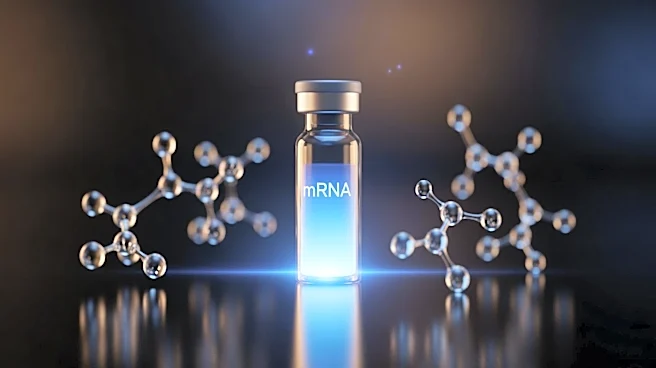
Moderna, in collaboration with the University of Oxford, is set to begin human trials for an mRNA-based vaccine aimed at preventing cancer in individuals with Lynch syndrome. This genetic condition significantly increases the risk of developing various
cancers, including colorectal and endometrial cancers. The phase 1/2 INTERCEPT-Lynch trial will be conducted at Oxford University's clinical trial units, with initial patient dosing expected soon. The vaccine, mRNA-4194, is designed to elicit immune responses against molecular targets associated with pre-cancerous cells, potentially preventing cancer from developing. This trial will assess the vaccine's safety and immunogenicity, with a phase 2 study planned for 2027 to evaluate preliminary efficacy.
Why It's Important?
Lynch syndrome affects approximately 1 in 400 people, with a high lifetime cancer risk of up to 80%. Current management options are limited to surveillance, low-dose aspirin, and surgery. The development of a vaccine could revolutionize prevention strategies for those with Lynch syndrome, reducing cancer incidence and associated healthcare burdens. Moderna's initiative also highlights the potential of mRNA technology beyond infectious diseases, expanding its application to hereditary cancer prevention. This trial represents a significant step in leveraging mRNA platforms for broader medical challenges, potentially benefiting a large population at risk.
What's Next?
Following the initial safety and immunogenicity assessments, the phase 2 portion of the trial will provide preliminary efficacy data. If successful, this could lead to further trials and eventual regulatory approval, offering a new preventive option for Lynch syndrome-associated cancers. The trial's progress will be closely monitored by the medical community and could influence future research and development in genetic cancer prevention. Stakeholders, including healthcare providers and patients, will be keenly interested in the outcomes, which could inform new guidelines and treatment protocols.