





What's Happening?
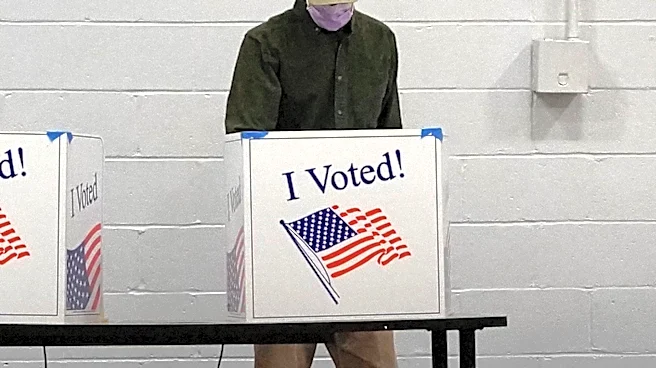
Hawaii's chief election officer, Scott Nago, is defending his decision to resolve two primary election ties by drawing names from a basket. This method was used for the House District 43 race, where incumbent Kanani Souza and challenger Sheila Medeiros
each received 842 votes, and the Senate District 20 race, where incumbent Kurt Fevella and challenger Bob McDermott both garnered 1,212 votes. State law mandates that tiebreakers be decided 'by lot' or by chance, with the chief election officer determining the specific method. Nago chose to place candidate names on slips of paper inside plastic balls, which were then put into a lauhala box, shaken, and drawn. He explained that this process mimics how the state determines the order of political parties on the primary election ballot, a method that has been previously used and proven effective.
Why It's Important?
This method of resolving election ties has sparked debate regarding voter disenfranchisement and the integrity of the electoral process. While election officials maintain that the process adheres to state law, some candidates and advocacy groups argue that such critical decisions should not be left to chance. Sheila Medeiros, one of the candidates involved, expressed her belief that the process 'disenfranchises the electorate' and that voters should have the final say, potentially through a general election. This situation highlights a tension between legal compliance and public perception of fairness in democratic procedures. The outcome of these tie-breaking draws directly impacts who advances to the general election, thereby shaping the legislative landscape of Hawaii.
What's Next?
While the current election cycle's tie-breaking decisions are final, the controversy may prompt calls for legislative review of Hawaii's election laws. Camron Hurt of Common Cause Hawaii suggested that a special election would have been a more appropriate resolution, emphasizing that 'the people should pick who governs us.' Although Chief Election Officer Nago acknowledges the criticism and the frustration of candidates, he maintains that the process followed existing law. The legislature has the authority to change the tie-breaking process for future elections, but any such changes would be too late for the current cycle. This situation could lead to increased scrutiny of election procedures and potential legislative efforts to amend how ties are resolved in Hawaii.
Beyond the Headlines
The use of random chance to decide election outcomes, while legally permissible in Hawaii and 27 other states, raises fundamental questions about democratic principles and voter representation. The method, often seen as a last resort, can undermine public confidence in the electoral system, particularly when candidates and their supporters feel that their efforts are negated by a random draw. This incident could fuel broader discussions about the balance between administrative efficiency in election management and the perceived fairness and legitimacy of results. It also highlights the varying approaches states take to ensure electoral integrity, with some opting for more voter-centric solutions like special elections, while others rely on established, albeit less popular, methods of chance.