






What's Happening?
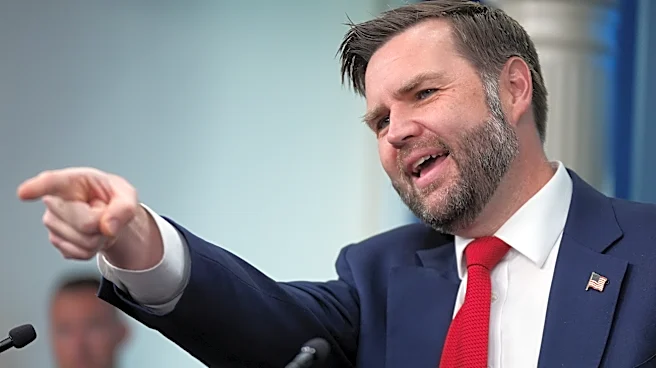
Vice President JD Vance has issued a strong rebuke to Israeli officials who have criticized President Trump regarding the US-Iran memorandum of understanding. The memorandum, which requires Israel to cease strikes on Hezbollah in Lebanon, has been a point
of contention. Vance, speaking from the White House briefing room, expressed disapproval of the personal attacks directed at President Trump by some members of the Israeli cabinet. This development highlights ongoing tensions between the U.S. and Israel over the handling of Middle Eastern policy, particularly concerning Iran and its regional influence.
Why It's Important?
The criticism from Vice President Vance underscores the delicate nature of U.S.-Israel relations, especially in the context of Middle Eastern geopolitics. The memorandum of understanding with Iran is a significant diplomatic move by the U.S., aiming to stabilize the region by curbing aggressive actions. However, it places Israel in a challenging position, as Hezbollah is considered a direct threat. The U.S. administration's stance could impact future diplomatic engagements and military strategies in the region. This situation also reflects broader international concerns about Iran's influence and the balance of power in the Middle East.
What's Next?
The response from Israeli officials to Vice President Vance's comments could shape future diplomatic interactions between the two nations. It remains to be seen how Israel will navigate its security concerns while adhering to the U.S.-Iran agreement. Additionally, the U.S. may need to engage in further diplomatic efforts to reassure its allies in the region and maintain stability. The situation could also influence U.S. domestic politics, as the administration's foreign policy decisions are scrutinized by both supporters and critics.