
What's Happening?
An automated rainwater harvesting system has been developed that combines tank level monitoring with soil moisture sensing to efficiently water plants and conserve resources. This system utilizes an ESP32
microcontroller to read analog water levels from a harvesting tank and digital soil moisture signals. The system is programmed to activate a 12V submersible pump only when the soil is dry and water is available in the tank. Crucially, it includes safety cutoffs to prevent the tank from being completely depleted. The system also features Wi-Fi connectivity, allowing for remote monitoring and control, and can send alerts, such as when the rainwater harvesting container is empty. This integration of sensors and automated controls aims to optimize water usage for irrigation.
Why It's Important?
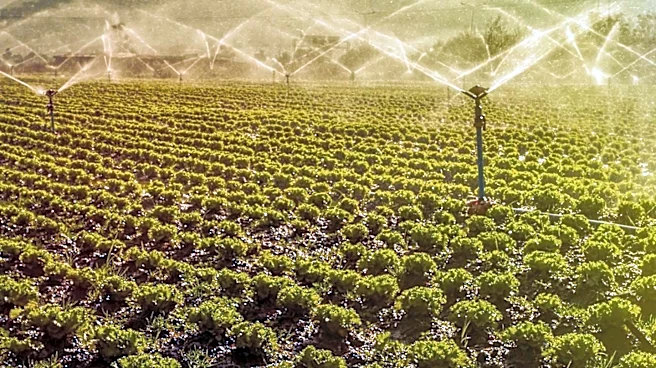
This automated rainwater harvesting system represents a significant step towards sustainable water management, particularly in regions facing water scarcity or seeking to reduce reliance on municipal water supplies. By precisely controlling when and how water is used for irrigation, it minimizes waste and ensures that plants receive water only when necessary. This approach can lead to substantial water savings for homeowners, agricultural operations, and urban green spaces. The system's ability to monitor tank levels and soil moisture in real-time, coupled with automated pump control, enhances efficiency and reduces the labor associated with manual watering. Furthermore, the integration of Wi-Fi and alert functionalities provides users with greater control and awareness of their water resources, promoting more responsible consumption and potentially lowering utility costs.
What's Next?
The development of such automated systems suggests a future where smart water management becomes more prevalent in both residential and commercial applications. Further advancements could include integrating weather forecasting data to anticipate rainfall and optimize water storage, or connecting with broader smart home ecosystems for centralized control. The system's open-source nature, indicated by the use of ESP32 and Arduino, could foster community-driven improvements and wider adoption. As technology progresses, these systems may become more affordable and accessible, leading to increased implementation in various settings, from individual gardens to larger agricultural fields. The focus will likely shift towards enhancing predictive capabilities and user-friendly interfaces to maximize water conservation efforts.
Beyond the Headlines
The broader implications of this technology extend beyond immediate water savings. By promoting efficient water use, these systems contribute to environmental sustainability by reducing strain on natural water sources and municipal infrastructure. They also highlight the growing trend of integrating Internet of Things (IoT) devices into everyday resource management, offering a glimpse into a future where homes and communities are more self-sufficient and environmentally conscious. Ethically, such systems encourage a mindset of conservation and responsible resource stewardship. Culturally, they could lead to a greater appreciation for water as a precious resource, fostering practices that prioritize its careful management in the face of climate change and increasing global water demand.