







What's Happening?
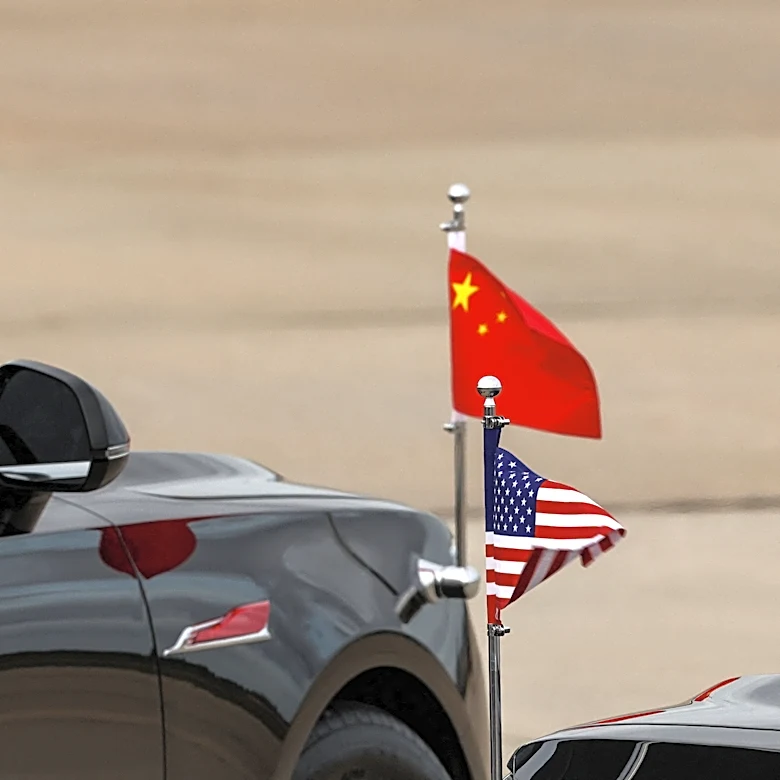
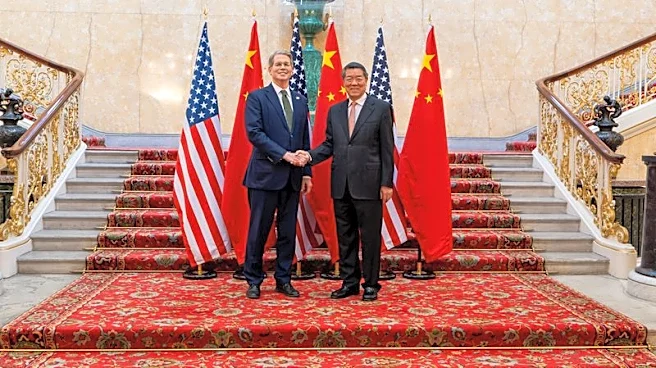
U.S. Representatives Sam Liccardo and Kevin Kiley of California have introduced legislation aimed at establishing binding and verifiable artificial intelligence (AI) safety safeguards with China. The proposal includes the creation of a direct crisis hotline
between the two governments to facilitate coordination on risks stemming from advanced AI systems. This framework seeks to remove legal barriers that currently prevent American AI safety experts from engaging in specific discussions with their Chinese counterparts. The legislation would also mandate the State Department and other administrative bodies to negotiate safeguards covering critical areas such as AI model testing, independent audits, transparency, incident reporting, and compliance verification. Representative Liccardo emphasized that significant technical work, including forging shared safety metrics and rigorous evaluation protocols, is necessary before political negotiations can effectively proceed. The State and Commerce departments would be required to provide Congress with monthly updates on these negotiations.
Why It's Important?
This legislative proposal is important because it addresses the escalating concerns surrounding the uncontrolled development of advanced AI and its potential global implications. By seeking to establish a direct crisis hotline and a comprehensive safety framework with China, the U.S. aims to mitigate risks that could arise from AI incidents, preventing them from escalating into broader crises. The initiative acknowledges that engagement with China on AI safety is driven by the inherent dangers of the technology, rather than political trust. This approach is crucial for national security, as it seeks to protect against AI-enabled chemical, biological, radiological, and nuclear (CBRN) threats, as well as major cybersecurity dangers. Furthermore, the legislation aims to protect American intellectual property by including provisions against model distillation, a process that could allow the reproduction of advanced U.S. AI technology. The establishment of common testing, evaluation, and verification standards through a proposed Center for AI Standards and Innovation could set a global precedent for responsible AI development.
What's Next?
The proposed legislation will now move through the U.S. legislative process, requiring consideration and potential approval by Congress. If passed, the State and Commerce departments would be tasked with initiating negotiations with China to establish the outlined AI safety framework and crisis hotline. These departments would also be required to provide Congress with monthly updates on the progress of these negotiations. The bill also authorizes $100 million for the Center for AI Standards and Innovation, which would bring together experts from industry, universities, and civil society to develop common standards. This center would need to be established and begin its work on developing testing, evaluation, and verification protocols. The success of these initiatives will depend on the willingness of both the U.S. and China to engage in technical and diplomatic discussions, prioritizing global AI safety over geopolitical tensions. The ongoing dialogue and technical exchanges between specialists from both countries will be critical in preventing dangerous AI incidents.
Beyond the Headlines
The proposal for an AI safety framework and crisis hotline with China highlights a deeper recognition of AI as a global existential risk, transcending traditional geopolitical rivalries. It echoes historical precedents, such as the Cold War-era hotlines established between the U.S. and the USSR, underscoring the belief that communication is vital even between adversaries when facing catastrophic threats. This initiative implicitly acknowledges that the rapid advancement of AI technology, particularly 'frontier' AI systems, presents challenges that no single nation can effectively manage alone. The focus on technical work, shared safety metrics, and rigorous evaluation protocols before political negotiations suggests a shift towards a more pragmatic, risk-averse approach to international relations in the context of emerging technologies. It also raises ethical considerations about the balance between national security, technological advancement, and international cooperation, particularly concerning intellectual property and the potential for dual-use technologies. The long-term implications could include the development of a new paradigm for international governance of advanced technologies, where shared threats necessitate unprecedented levels of collaboration.