




What's Happening?
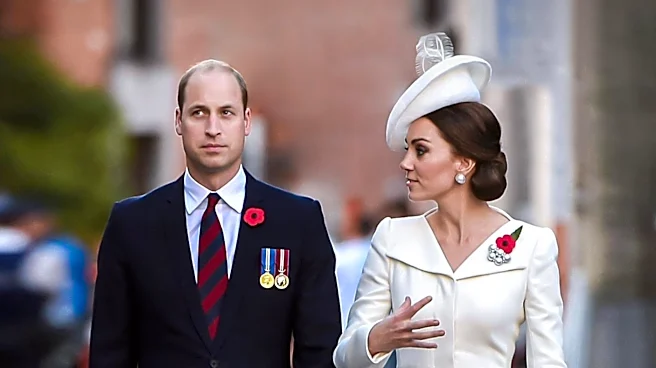
King Charles has appointed Kate Middleton, the Princess of Wales, as a Grantor of Royal Warrants, a power not held by a Princess of Wales since Mary of Teck in 1910. This new role allows Princess Kate to select companies that regularly supply goods or services
to the royal household to receive a royal seal of approval. The Royal Warrant Holders Association has confirmed that both Prince William and Princess Kate will begin granting warrants from 2026. This appointment signifies a significant shift in responsibilities towards the next generation of the Royal Family. Historically, Princess Diana was never granted this authority when Charles was Prince of Wales. To qualify for a royal warrant, a business must have supplied the grantor for at least five of the last seven years on a regular and ongoing basis. Warrants are granted for up to five years and are subject to renewal, allowing businesses to display the Royal Arms on their products and promotional materials.
Why It's Important?
This new authority for Princess Kate carries substantial commercial weight and serves as a powerful endorsement for businesses. Given her influence on consumer trends, a royal warrant from the Princess of Wales could significantly boost sales and global recognition for recipient companies. Her choices in fashion and accessories already demonstrate her ability to drive consumer behavior, making this new power a valuable asset for British industry. Beyond the commercial impact, the appointment symbolizes a broader transition of responsibilities within the monarchy, preparing Prince William and Princess Kate for their future roles. It highlights the increasing prominence and influence of the Princess of Wales in supporting and promoting British businesses and craftsmanship on a global stage.
What's Next?
Princess Kate and Prince William are set to begin granting royal warrants from 2026. This means that over the next few years, businesses that have consistently supplied their households will be eligible for this prestigious recognition. The Royal Warrant Holders Association will likely see an increase in applications or reviews as companies seek to align with the new grantors. Consumers can expect to see new royal crests appearing on products, indicating endorsement from the Princess of Wales. This development will also be closely watched as an indicator of the evolving roles and public duties of the younger generation of the Royal Family, particularly as they continue to take on more responsibilities.
Beyond the Headlines
The granting of this power to Princess Kate reflects a strategic move by King Charles to modernize the monarchy and empower its key figures. It underscores the growing importance of the Princess of Wales as a public figure with significant economic and cultural influence. This move could also be seen as a way to further connect the monarchy with contemporary British commerce and innovation, leveraging Princess Kate's popularity to support national industries. The historical context, noting that Princess Diana did not receive this power, highlights a deliberate choice to elevate the current Princess of Wales's role, potentially signaling a more active and visible role for future consorts in royal patronage and economic promotion.