




What's Happening?
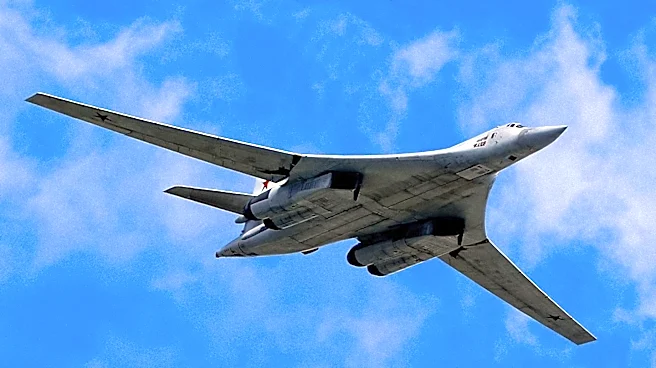
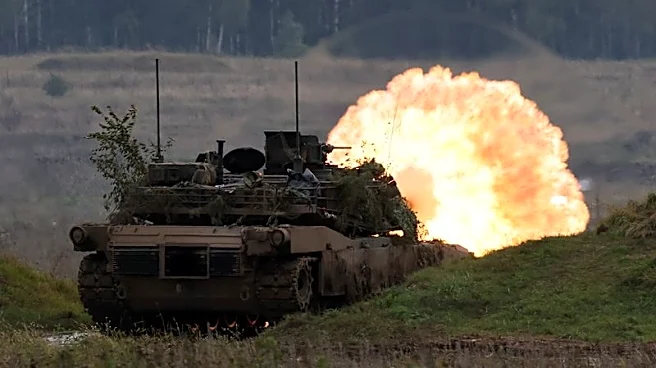
Russia is actively constructing an anti-Western security network across parts of Africa, drawing in Algeria, Haftar-controlled Libya, Mali, Burkina Faso, and Niger. This initiative involves providing advanced Russian weaponry, military support, and training.
The alignment, while not yet a formal pact like NATO, is progressing through deeper cooperation, facilitated by Russia's diplomatic efforts, such as repairing Mali-Algeria ties. The network is characterized by a growing Russian military footprint, particularly in Libya, where access to Khalifa Haftar's bases provides a strategic position near NATO's southern flank and a logistics bridge into the Sahel. Russian military-linked flights involving Mali, Burkina Faso, and Niger have been tracked, with Burkina Faso serving as a transit hub. The G7 has expressed concern over the destabilizing impact of this increasing Russian presence.
Why It's Important?
This development is important because it signifies a strategic shift in global power dynamics, challenging the traditional influence of Western nations in Africa. The establishment of a Russian-centered security network, equipped with advanced military hardware, could lead to increased regional instability and proxy conflicts. For the U.S. and its allies, this represents a direct challenge to their security interests, particularly given Russia's strategic positioning in Libya, which offers proximity to NATO's southern flank. The provision of sophisticated weaponry to these African nations could escalate existing conflicts or create new ones, potentially leading to humanitarian crises and further displacement. Economically, this could divert resources from development towards military spending, hindering progress in these regions. The G7's expressed concern underscores the perceived threat to international security and the established global order.
What's Next?
The formation of this security bloc is likely to prompt increased scrutiny and potential countermeasures from Western powers, including the U.S. and Europe. There may be diplomatic efforts to counter Russia's growing influence, possibly through increased engagement with other African nations or by strengthening existing partnerships. The G7's concerns suggest that there could be discussions about imposing further sanctions or implementing policies to mitigate Russia's expansion. Militarily, the presence of advanced Russian weaponry could lead to a regional arms race, with neighboring countries seeking to bolster their own defenses. The situation in Libya, with Russia's access to strategic bases, will likely remain a focal point for international security discussions, potentially leading to increased surveillance or intelligence gathering in the region.
Beyond the Headlines
Beyond the immediate security implications, this development highlights a broader geopolitical struggle for influence in Africa. Russia's strategy of providing military support and weapons without the conditionalities often associated with Western aid appeals to certain African governments seeking to reduce Western influence. This could lead to a re-evaluation of foreign policy approaches by the U.S. and European nations towards Africa, potentially shifting towards more flexible engagement models. The ethical implications of supplying advanced weaponry to regions with existing instability are also significant, raising questions about the potential for human rights abuses and the exacerbation of conflicts. Culturally, this shift could foster a more multipolar world order, where African nations have more diverse options for partnerships, potentially leading to a redefinition of international alliances and global governance structures.