





What's Happening?
The order in which candidates appear on general election ballots in Arizona varies by county, a system determined by the performance of each party's gubernatorial candidate in that specific county during the most recent election. For the upcoming election,
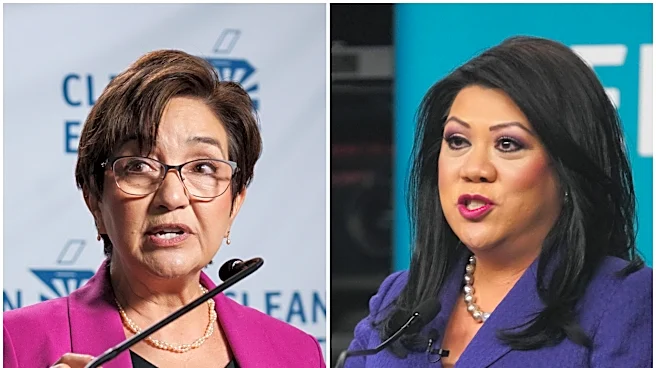
ballots in Apache, Coconino, Maricopa, Pima, and Santa Cruz counties will list Democrat Katie Hobbs first, as she won in those counties in 2022. Conversely, residents in the other 10 counties will see Republican Andy Biggs listed first, reflecting Kari Lake's victory there four years prior. This system extends to all other candidates on the ballot within those counties. Democrats previously challenged this system in federal court in 2019, citing research on the 'primacy effect,' which suggests voters tend to favor the first-listed candidate. However, the case was dismissed due to a lack of legal standing.
Why It's Important?
The varying ballot order in Arizona raises significant questions about electoral fairness and potential voter influence. The 'primacy effect' theory suggests that being listed first on a ballot can provide a subtle but measurable advantage to candidates, potentially impacting election outcomes. This system could disproportionately benefit one party over another in certain regions, depending on past gubernatorial results, rather than reflecting current voter preferences or candidate merit alone. For political parties and candidates, securing top billing in key counties could be perceived as a strategic advantage, influencing campaign resource allocation and voter engagement efforts. The ongoing debate highlights concerns about the integrity of electoral processes and the potential for structural elements to inadvertently sway democratic results, affecting public trust in elections.
What's Next?
The current ballot order system will be in effect for the upcoming November general election. The outcome of the gubernatorial race in each county will determine which party receives top billing on ballots for the 2028 and 2030 elections in those respective counties. Representative Alexander Kolodin, a Scottsdale Republican, previously introduced legislation to implement a rotating ballot order system, which would ensure each party has an equal chance at the first position across precincts. Although this plan passed the House, it failed in the Senate. Kolodin, now running for secretary of state, continues to advocate for replacing the current system to ensure fairness. The debate over ballot order is likely to persist, potentially leading to future legislative efforts or legal challenges aimed at reforming the system.
Beyond the Headlines
The Arizona ballot order controversy delves into the psychological aspects of voting behavior and the subtle ways in which electoral design can influence democratic outcomes. The 'primacy effect' is a well-documented cognitive bias, and its potential impact on elections raises ethical questions about ensuring truly neutral and equitable voting conditions. This issue extends beyond partisan politics, touching on the fundamental principles of fair representation and equal opportunity in elections. The resistance to changing the current system, despite bipartisan acknowledgment of its potential unfairness, highlights the deep-seated political calculations and strategic advantages perceived by parties. It underscores the ongoing challenge of balancing historical electoral practices with modern understandings of voter psychology and the pursuit of an ideal democratic process.