


What's Happening?
The ongoing peace talks between the United States and Ukraine, aimed at resolving the conflict in Eastern Europe, are facing significant challenges following the recent death of a Russian general. The discussions, held at President Trump's Mar-a-Lago
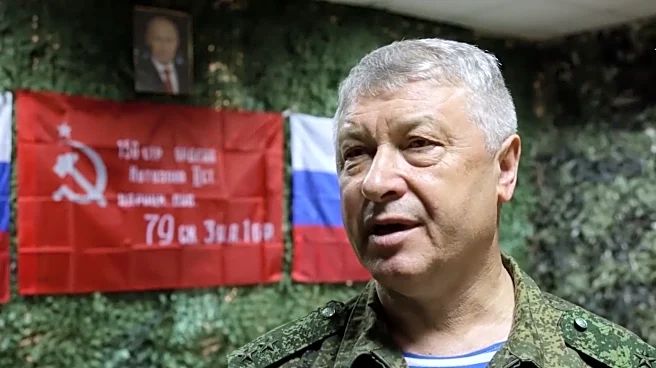
property, focus on a 20-point peace plan that includes territorial terms, security guarantees, and economic stabilization measures. The death of Lt. Gen. Fanil Sarvarov, a key figure in Russia's military training doctrine, has added tension to the talks. Sarvarov was killed by a car bomb in Moscow, with investigators suggesting possible involvement by Ukrainian intelligence, though no group has claimed responsibility. The peace plan requires Russia to halt major combat operations before any demobilization or sanctions relief, with foreign observers potentially monitoring key checkpoints. However, Russian Deputy Foreign Minister Sergei Ryabkov has stated that Moscow will not sign any agreement that contradicts its security demands.
Why It's Important?
The peace talks are crucial as they represent one of the most significant efforts to end the prolonged conflict in Eastern Europe, which has resulted in substantial loss and suffering. The involvement of President Trump and his rapport with both Ukrainian President Volodymyr Zelensky and Russian President Vladimir Putin could potentially bridge gaps that have hindered previous diplomatic efforts. The outcome of these talks could have far-reaching implications for regional stability and international relations. A successful agreement could lead to the cessation of hostilities, reconstruction of critical infrastructure, and improved security in the region. Conversely, failure to reach an agreement could result in continued military operations and further destabilization, affecting global security and economic conditions.
What's Next?
The next steps in the peace process involve continued negotiations to address the contentious issues of territorial concessions and security guarantees. President Trump has expressed optimism about the talks, describing them as the closest the conflict has come to resolution. However, the recent missile strikes on Kyiv and surrounding regions underscore the ongoing challenges. The international community, including organizations like the OSCE, may play a role in monitoring any ceasefire agreement. The situation remains fluid, with potential for further escalation if a consensus is not reached. The U.S. and its allies will need to navigate these complexities to achieve a sustainable peace.
Beyond the Headlines
The death of Lt. Gen. Sarvarov highlights the ongoing risks and volatility in the region. It raises questions about the security of military leaders and the potential for further targeted attacks. The incident also underscores the broader geopolitical tensions between Russia and Ukraine, with implications for international diplomacy and security. The peace talks, while focused on immediate conflict resolution, also have long-term implications for the balance of power in Eastern Europe and the role of international actors in conflict mediation.