


What's Happening?
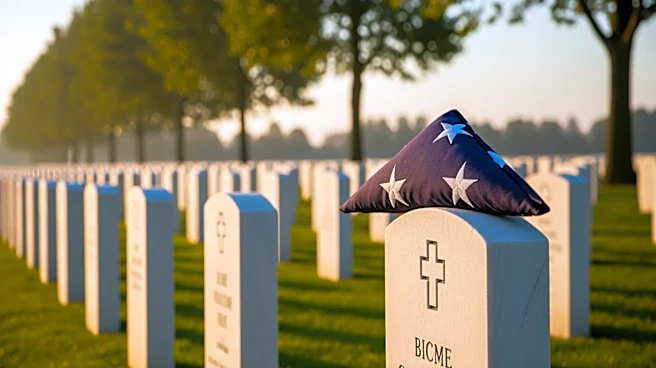
During a Memorial Day speech at Arlington National Cemetery, President Trump made a remark that was widely criticized as inappropriate. While recounting the history of the cemetery, he noted with a laugh that there were not many men named Donald buried
there. This comment was perceived as a tasteless joke about the fallen soldiers, sparking backlash on social media. Critics highlighted the solemnity of the occasion and the inappropriateness of making light-hearted remarks in such a setting. The speech, intended to honor the sacrifices of soldiers, was overshadowed by this controversial aside, drawing attention to Trump's history of controversial statements and his past deferments during the Vietnam War.
Why It's Important?
The incident underscores the ongoing scrutiny of President Trump's public statements and their impact on his public image. Memorial Day is a significant occasion in the U.S., dedicated to honoring military personnel who have died in service. The backlash reflects broader concerns about respect for military traditions and the expectations of presidential decorum. This event may influence public perception of Trump's leadership, particularly among veterans and military families. It also highlights the potential political ramifications of perceived insensitivity, which could affect Trump's support base and his standing in future political endeavors.
What's Next?
The reaction to Trump's speech may prompt further discussions about the role of presidential rhetoric in national ceremonies. Political analysts and commentators are likely to continue debating the implications of Trump's remarks, potentially influencing future speeches and public appearances. The administration may need to address the criticism to mitigate any negative impact on Trump's relationship with military communities. Additionally, this incident could become a talking point in political campaigns, as opponents may use it to question Trump's suitability for leadership roles.
Beyond the Headlines
This event raises questions about the cultural expectations of leadership and the balance between personal style and public responsibility. It highlights the challenges leaders face in maintaining respect for traditions while engaging with diverse audiences. The incident may also prompt discussions about the evolving nature of political communication in the digital age, where social media amplifies public reactions and holds leaders accountable for their words.