



What's Happening?
Representative Julie Fedorchak (R-ND) successfully advocated for North Dakota farmers and ranchers facing severe drought conditions, leading the U.S. Department of Agriculture (USDA) to confirm greater flexibility in federal emergency haying rules. Following
her request, the USDA announced that producers can now contact their local county Farm Service Agency (FSA) office to request an extension to the standard 15-day timeframe for removing hay bales from Conservation Reserve Program (CRP) lands. Fedorchak raised this issue after an agriculture roundtable with producers and state leaders at Kuhn Farms near Dickinson, where concerns were voiced about the rigidity of federal deadlines that do not align with on-the-ground conditions. Producers highlighted that the 15-day deadline was impractical, especially during harvest, and sought a 30-day extension and more authority for local FSA leadership to determine appropriate timing based on local conditions. This move by the USDA directly addresses these concerns, providing much-needed relief to farmers struggling with drought.
Why It's Important?
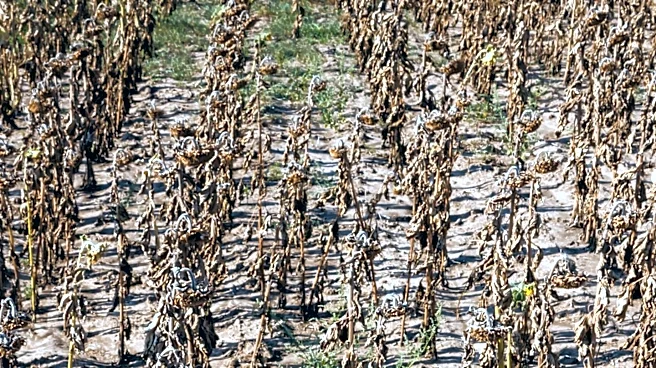
This development is crucial for North Dakota's agricultural sector, which is currently grappling with severe drought, low commodity prices, high input costs, and tightening producer margins. The flexibility granted by the USDA directly impacts the operational viability of farmers and ranchers by allowing them more time to manage their hay supplies, a critical resource during drought. Without this extension, producers would face significant logistical and financial burdens, potentially leading to losses in forage supplies and increased operational costs. The decision underscores the importance of responsive federal policies that can adapt to regional environmental challenges, ensuring the resilience of the agricultural supply chain. It also highlights the influence of congressional advocacy in translating local concerns into actionable federal policy changes, benefiting a key economic sector in North Dakota and contributing to national food security.
What's Next?
North Dakota producers who require additional time beyond the initial 15-day period for hay bale removal are encouraged to contact their local county FSA office to request an extension. Representative Fedorchak will continue to work with her colleagues in Congress to strengthen the farm safety net, expand markets, and provide producers with the necessary tools for success and to maintain national food security. Discussions around broader agricultural challenges, including crop insurance, reference prices, disaster assistance, farm credit, and livestock programs, are expected to continue. Furthermore, the ongoing work on a new five-year Farm Bill in Congress will likely incorporate lessons learned from current drought conditions and the need for flexible federal programs. The Senate is also working on passing legislation for year-round E15 fuel availability, which Fedorchak supports for its potential to boost North Dakota's corn industry.
Beyond the Headlines
The USDA's decision to grant flexibility in hay bale removal deadlines reflects a deeper recognition of the disconnect between standardized federal regulations and the diverse, often unpredictable, realities faced by farmers on the ground. This incident highlights the need for federal agencies to empower local leadership with greater discretion to tailor programs to specific regional conditions, rather than imposing one-size-fits-all mandates. It also brings to light the ethical dimension of agricultural policy, emphasizing the government's role in supporting the livelihoods of farmers who are on the front lines of climate change impacts. The broader implications extend to the ongoing debate about the future of the farm safety net and the necessity of integrating climate resilience into agricultural policy to ensure long-term sustainability and food security in the face of increasing environmental volatility.