


What's Happening?
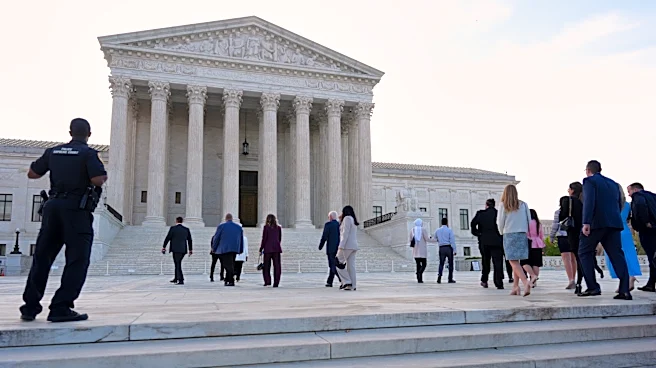
President Donald Trump attended the Supreme Court oral arguments on Wednesday, marking a historic moment as he observed proceedings related to the administration's efforts to end birthright citizenship. Despite the significance of his presence, Chief
Justice John Roberts did not acknowledge President Trump during the session. The arguments focused on the administration's controversial push to alter the interpretation of the 14th Amendment, which grants citizenship to all individuals born on U.S. soil. CNN's Joan Biskupic reported from inside the courtroom, noting the atmosphere and the legal discussions that unfolded during the session.
Why It's Important?
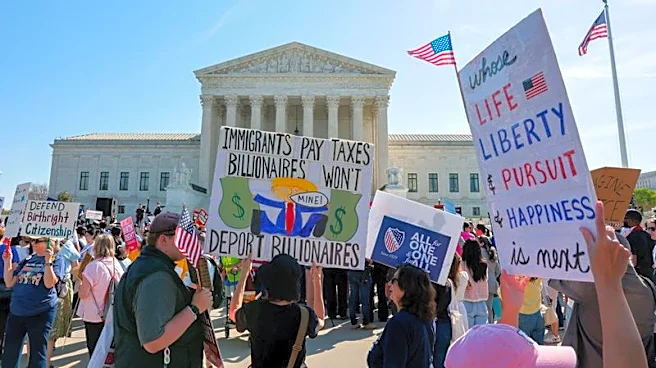
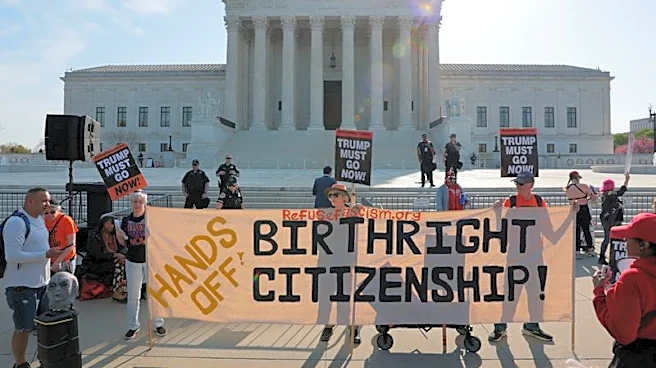
The presence of President Trump at the Supreme Court underscores the administration's commitment to challenging established interpretations of the Constitution, particularly concerning immigration and citizenship. The outcome of this case could have profound implications for millions of individuals born in the United States to non-citizen parents. A decision to end birthright citizenship would represent a significant shift in U.S. immigration policy, potentially affecting demographic trends and the legal status of many residents. This case also highlights the ongoing tensions between the executive branch and the judiciary over immigration policies.
What's Next?
The Supreme Court's decision on this matter will be closely watched, as it could set a precedent for future interpretations of the 14th Amendment. Legal experts and civil rights organizations are likely to respond vigorously, either through further legal challenges or advocacy efforts, depending on the outcome. The administration may also face political repercussions, as immigration remains a contentious issue in U.S. politics. Stakeholders, including immigrant communities and advocacy groups, will be preparing for the potential impacts of the court's ruling.