



What's Happening?
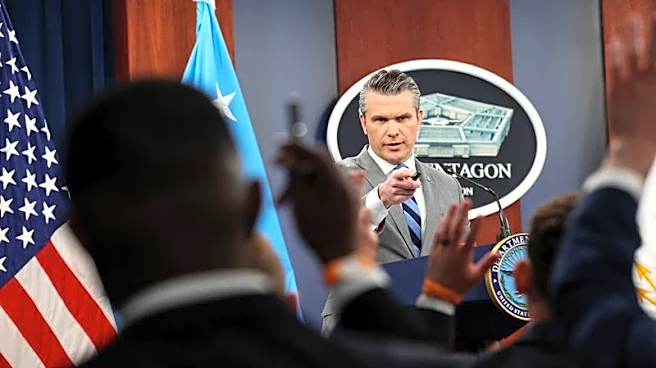
Secretary of War Pete Hegseth has dismissed rumors that Iran is employing trained dolphins armed with explosives to block the Strait of Hormuz. While denying Iran's use of such tactics, Hegseth left open the possibility that the U.S. might possess similar
capabilities. The discussion follows a Wall Street Journal report suggesting Iran's interest in reviving Soviet-era programs that trained dolphins for military purposes. The U.S. Navy has a history of training marine mammals for various tasks, but the notion of 'kamikaze dolphins' was met with skepticism and humor by military officials.
Why It's Important?
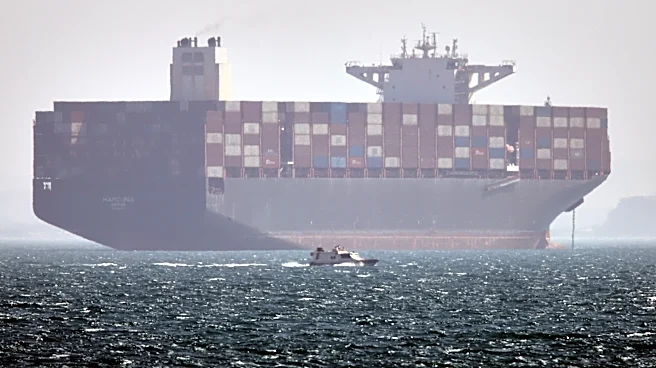
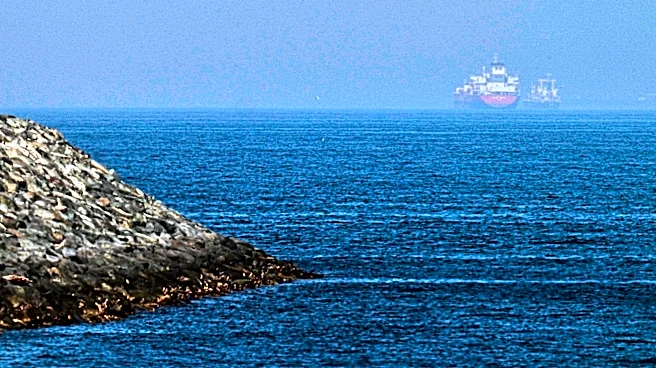
The rumors highlight the unconventional tactics that nations might explore in asymmetric warfare, particularly in strategic locations like the Strait of Hormuz. While the idea of 'kamikaze dolphins' may seem far-fetched, it underscores the broader challenges of maritime security and the innovative methods countries might employ to protect or disrupt critical waterways. The U.S.'s response reflects its awareness of unconventional threats and its readiness to address them, maintaining its strategic advantage in global maritime operations.
Beyond the Headlines
The discussion of 'kamikaze dolphins' also raises ethical questions about the use of animals in military operations. While marine mammals have been used for tasks like mine detection and recovery, the idea of using them as offensive weapons could spark debates about animal rights and the moral implications of such practices. As military technology evolves, balancing operational effectiveness with ethical considerations will remain a critical challenge for defense policymakers.