






What's Happening?
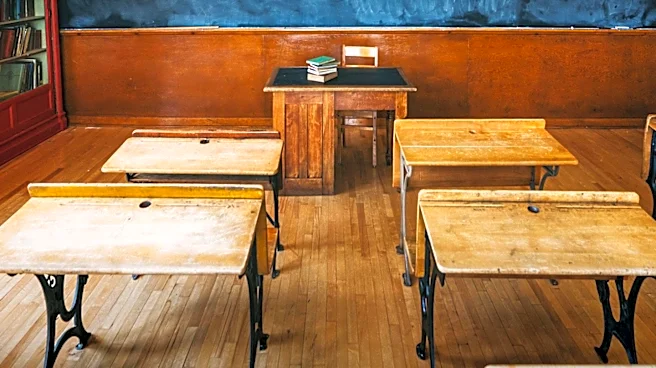
ThinkTech Hawaii recently hosted a discussion titled 'A Splendid Life: Teaching History' as part of its 'Journeys of the Mind' series. The program featured Carl Ackerman as the host and Russell Motter as the guest. The conversation centered on the significance
of teaching history and its impact on students, drawing from Mr. Motter's extensive teaching career at institutions including Iolani School, the UH Lab School, and UH Manoa. The discussion also explored the challenges and barriers that prevent history teachers from effectively performing their jobs. A key aspect highlighted was Mr. Motter's role with the Keables Chair at Iolani, which enabled him to bring in critical historical speakers, enriching the educational experience for students.
Why It's Important?
This discussion is important because it underscores the critical role of history education in shaping students' understanding of the world and their place within it. By examining the methods and challenges of history pedagogy, ThinkTech Hawaii brings attention to the need for effective teaching strategies and resources. Mr. Motter's insights, derived from a long and distinguished career, offer valuable perspectives on how to engage students and make history relevant. The ability to attract prominent historical speakers, as facilitated by the Keables Chair, demonstrates the impact of dedicated programs in enhancing educational quality. This conversation can inspire educators and policymakers to re-evaluate and strengthen history curricula, ensuring that future generations receive a comprehensive and engaging historical education.
What's Next?
The insights shared during this ThinkTech Hawaii discussion could prompt further conversations and initiatives within Hawaii's educational community regarding history teaching. Educators might explore new pedagogical approaches to overcome identified barriers and enhance student engagement. Institutions like Iolani School and the University of Hawaii could leverage Mr. Motter's experiences to refine their history programs and foster more dynamic learning environments. The emphasis on bringing in critical historical speakers might encourage more schools to seek similar opportunities, enriching their students' exposure to diverse historical perspectives. Ultimately, this discussion serves as a catalyst for continuous improvement in history education across the state.
Beyond the Headlines
Beyond the immediate educational implications, the discussion on history pedagogy touches upon broader societal issues, such as critical thinking, civic engagement, and cultural identity. Effective history teaching is crucial for developing informed citizens who can analyze past events to understand present challenges and anticipate future trends. The barriers to effective teaching, whether systemic or resource-related, can have long-term consequences on a society's collective memory and its ability to learn from history. By highlighting the importance of engaging students with historical narratives, the program implicitly advocates for a more nuanced and comprehensive understanding of history, moving beyond rote memorization to foster deeper analytical skills and a more robust sense of community and global awareness.