



What's Happening?
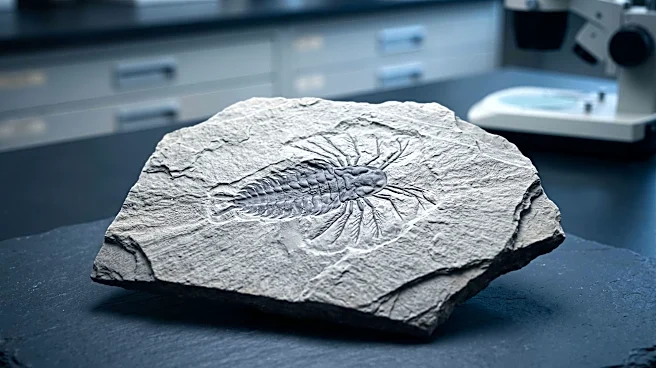
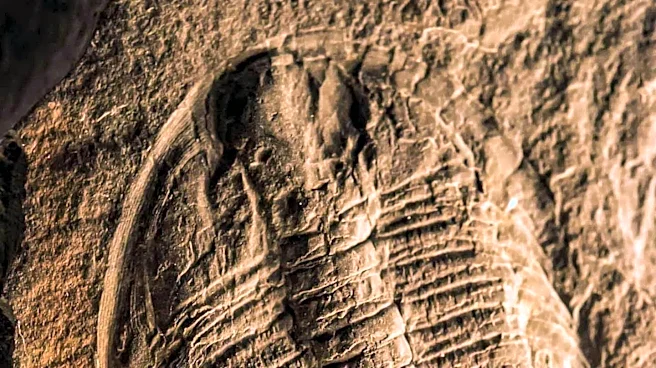
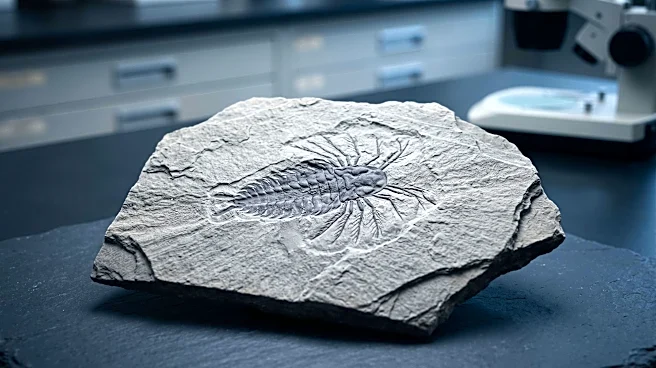
New discoveries of Cambrian fossils, particularly from the Burgess Shale, have provided unprecedented insights into the soft anatomy of the ancient arthropod Tuzoia. Previously, only its distinctive two-valved carapace with a net-like pattern, raised
lateral ridge, and prominent marginal spines were well-known. Charles Doolittle Walcott established the genus Tuzoia in 1912 based on these carapaces, which are abundant in Cambrian rocks. However, the soft tissues beneath the shell were rarely preserved, leaving much unknown about its head, limbs, and evolutionary placement. Recent studies, including 2022 phylogenetic analyses, have examined a small number of specimens with preserved soft tissues, revealing details such as eyes on short supports and an elongated, fine structure interpreted as a possible antenna. These findings are beginning to clarify its body plan and suggest a tentative placement near the base of the mandibulate group, though some mouthpart identities remain unresolved.
Why It's Important?
The detailed study of Tuzoia's soft tissues is crucial for understanding the evolutionary history of arthropods, a highly diverse and successful group of animals. The Cambrian period, often referred to as the 'Cambrian explosion,' was a time of rapid diversification of animal life, and understanding the anatomy of creatures like Tuzoia helps scientists piece together the early branches of the tree of life. Resolving the evolutionary position of Tuzoia, particularly its potential affinity with mandibulata, could shed light on the origins of insects, crustaceans, and myriapods. The contrast between the abundance of carapaces and the scarcity of soft anatomy in the fossil record highlights the challenges in reconstructing ancient life forms and underscores the significance of these rare, well-preserved specimens for paleontological research and our understanding of ancient ecosystems.
What's Next?
Future research will likely focus on further analyzing the rare soft-tissue specimens of Tuzoia to resolve remaining uncertainties regarding its anatomy, particularly the precise identification of mouthparts and limb attachments. Scientists will continue to refine phylogenetic analyses as more complete fossil evidence emerges, aiming to solidify Tuzoia's position within the arthropod family tree. The ongoing search for new Cambrian fossil sites and improved preservation techniques could yield additional specimens with soft tissues, providing more comprehensive data. This continued exploration will contribute to a more accurate and detailed understanding of the Cambrian explosion and the early evolution of complex animal body plans.
Beyond the Headlines
The study of Tuzoia and other Cambrian fossils extends beyond mere anatomical description; it offers a window into the fundamental processes of evolution and the conditions that fostered the emergence of complex life. The challenges in interpreting incomplete fossil records, where hard parts are common but soft tissues are rare, underscore the probabilistic nature of scientific reconstruction and the continuous refinement of hypotheses. The ongoing debate about the exact branching order within early arthropods highlights the dynamic and iterative nature of scientific inquiry. Furthermore, the existence of such well-preserved fossils from hundreds of millions of years ago speaks to the extraordinary geological processes that allow for the preservation of delicate biological structures, providing invaluable data for understanding Earth's ancient past.