
What's Happening?
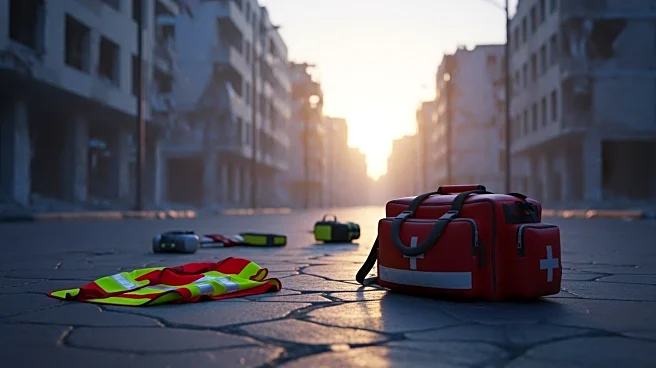
First responders have entered a contested neighborhood in Aleppo, Syria, following days of intense clashes between government forces and Kurdish-led forces. The fighting, which began on Tuesday, has resulted
in at least 23 deaths and displaced over 140,000 people. The clashes erupted in predominantly Kurdish neighborhoods after failed negotiations to integrate the Syrian Democratic Forces (SDF) into the national army. The SDF, a U.S.-backed group instrumental in combating ISIS, has evacuated from the Sheikh Maqsoud neighborhood but vows to continue fighting. The United Nations is attempting to deliver essential supplies to affected areas, while government forces have shown journalists the damage inflicted, including a hospital allegedly targeted by both sides.
Why It's Important?
The conflict in Aleppo underscores the ongoing instability in Syria, particularly in regions with significant Kurdish populations. The displacement of thousands highlights the humanitarian crisis exacerbated by the conflict. The involvement of the SDF, a key ally in the fight against ISIS, complicates the situation, as their integration into the Syrian national army remains unresolved. This development could impact U.S. foreign policy and military strategy in the region, as well as international humanitarian efforts. The situation also raises concerns about the potential for further escalation and the broader implications for regional security.
What's Next?
The immediate focus is on humanitarian relief, with the UN working to provide food, fuel, and medical supplies to those affected. The partial ceasefire declared by the SDF may offer a temporary reprieve, but the underlying tensions remain unresolved. The Syrian government and Kurdish forces are likely to continue negotiations, with international stakeholders monitoring the situation closely. The potential for renewed violence looms, and the international community may need to intervene diplomatically to prevent further escalation.