



What's Happening?
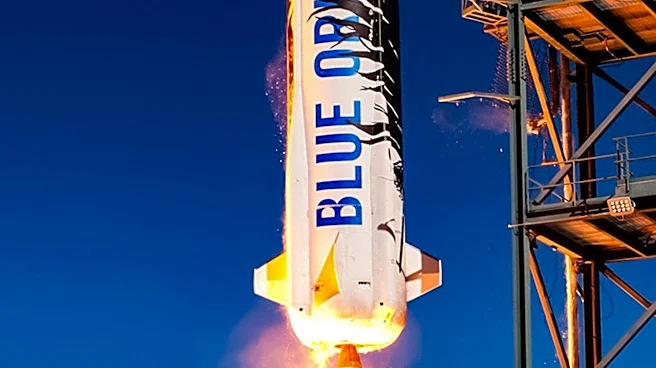
NASA and Blue Origin have announced a partnership to conduct hot fire testing of the New Glenn rocket's second stage at NASA's Stennis Space Center in Mississippi. This collaboration is part of a reimbursable Space Act Agreement aimed at supporting Artemis
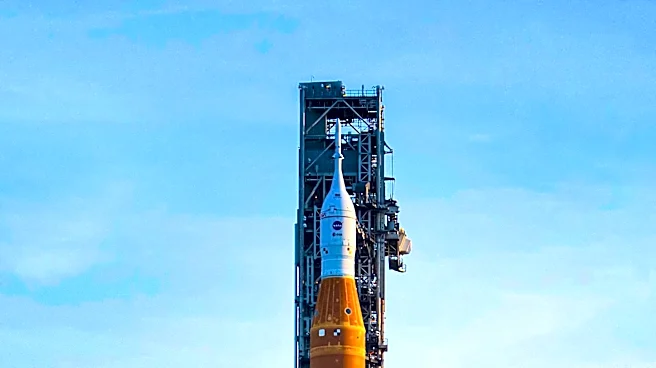
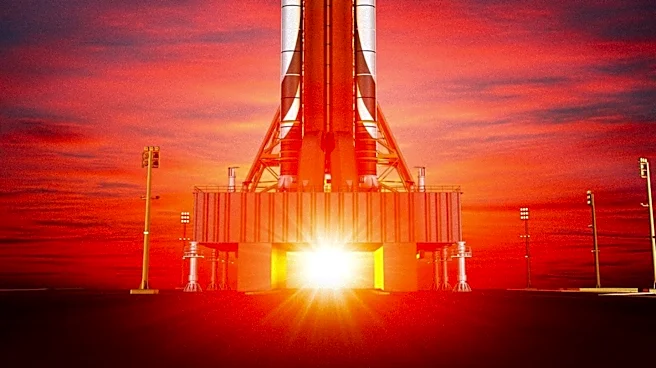
missions planned for 2027 and beyond. The testing will take place on the historic B-2 test stand, which was originally built for the Apollo Program's Saturn V rocket stages and has since been used for major propulsion milestones, including the Space Launch System core stage Green Run testing before Artemis I. The New Glenn rocket, named after NASA astronaut John Glenn, features a second stage powered by two BE-3 engines using liquid oxygen and liquid hydrogen propellants, each producing 200,000 pounds of thrust in vacuum.
Why It's Important?
This partnership between NASA and Blue Origin signifies a significant step in advancing the capabilities needed for future Artemis missions, which aim to return astronauts to the Moon and establish a sustained lunar presence. By utilizing the historic B-2 test stand, the collaboration bridges the gap between past and future space exploration efforts, leveraging existing infrastructure to support modern commercial spaceflight. This move also highlights the importance of public-private partnerships in accelerating space exploration and innovation, potentially reducing costs and increasing efficiency in achieving NASA's long-term goals of lunar and Martian exploration.
What's Next?
The hot fire testing of the New Glenn rocket's second stage is targeted to begin this fall. As the testing progresses, it will be crucial to monitor the outcomes and any technical challenges that may arise. Successful testing could pave the way for further collaborations between NASA and commercial space companies like Blue Origin, potentially leading to more frequent and advanced missions to the Moon and beyond. Stakeholders, including government agencies and private companies, will likely continue to explore similar partnerships to enhance the United States' position in the global space race.