







What's Happening?
The Philippines has gained access to a $500-million loan facility from the Asian Development Bank (ADB) to address the impacts of El Niño. This facility, known as the Disaster Risk Improvement Project 2 (DRIP 2), is designed to provide immediate and short-term
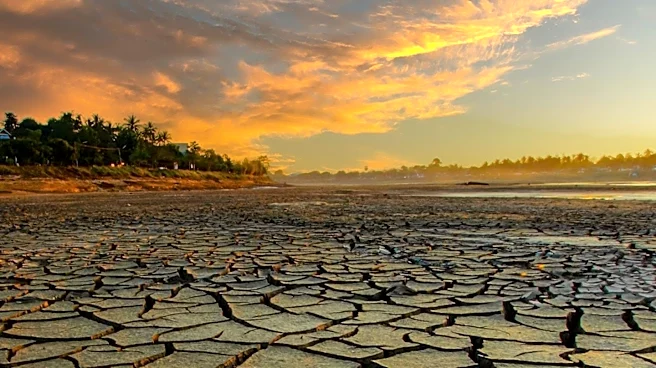
funding following disasters. According to ADB Country Director for the Philippines Andrew Jeffries, the funds can be drawn down by the government if a state of emergency is declared. DRIP 2 also aims to bolster the government's policies and institutional frameworks for disaster response at both national and subnational levels. The ADB website states that the project will help the Philippines adopt an anticipatory approach to disaster response, fostering long-term resilience by tackling underlying systemic risks. The Super El Niño is identified as a significant near-term risk, particularly from the fourth quarter of the current year through the first quarter of next year. An October 7 report from the National Disaster Risk Reduction and Management Council indicated that approximately 115,246 families across 906 barangays in various regions have already been affected by the dry spell associated with the initial stages of El Niño.
Why It's Important?
This $500-million ADB loan facility is crucial for the Philippines as it faces the escalating threat of El Niño, which can severely impact agriculture, water resources, and public health. The proactive measure of securing this funding allows the government to respond more effectively and rapidly to the socio-economic disruptions caused by prolonged dry spells and associated environmental challenges. By strengthening disaster response policies and institutional frameworks, DRIP 2 aims to shift the country towards a more anticipatory and resilient approach to natural calamities, reducing the reliance on reactive measures. The financial assistance will help mitigate potential losses in agricultural output, protect livelihoods, and ensure the provision of essential services to affected communities. This initiative underscores the importance of international cooperation in addressing climate-related disasters, providing a financial safety net that can prevent widespread humanitarian crises and economic setbacks in vulnerable regions.
What's Next?
The Philippines government can now draw upon the $500-million ADB facility should a state of emergency be declared due to El Niño's impact. The focus will be on utilizing these funds for immediate relief and recovery efforts, as well as for implementing long-term strategies to enhance disaster preparedness and resilience. The National Disaster Risk Reduction and Management Council will continue to monitor the effects of the Super El Niño, especially during the critical period from the fourth quarter of the current year to the first quarter of next year. The Philippine Space Agency (PhilSA) will also play a role by generating disaster extent maps to delineate the footprint of floods, landslides, and other natural disasters, providing crucial data for response efforts. The ongoing implementation of DRIP 2 will involve continuous efforts to strengthen national and subnational disaster response mechanisms, aiming to integrate an anticipatory approach into the country's overall disaster management strategy.
Beyond the Headlines
The availability of this ADB loan facility highlights a broader global trend towards financing climate resilience and disaster risk reduction in developing nations. While the immediate focus is on El Niño, the DRIP 2 framework signifies a strategic shift towards embedding long-term resilience into national development plans. This approach acknowledges that climate-related events are becoming more frequent and intense, necessitating sustained investment in infrastructure, early warning systems, and adaptive capacities. The emphasis on strengthening institutional frameworks suggests a move beyond mere financial aid to fostering self-sufficiency and robust governance in disaster management. This could set a precedent for other nations facing similar climate vulnerabilities, promoting a model where international financial institutions partner with governments to build enduring resilience against environmental shocks, thereby safeguarding economic stability and human well-being in the face of a changing climate.