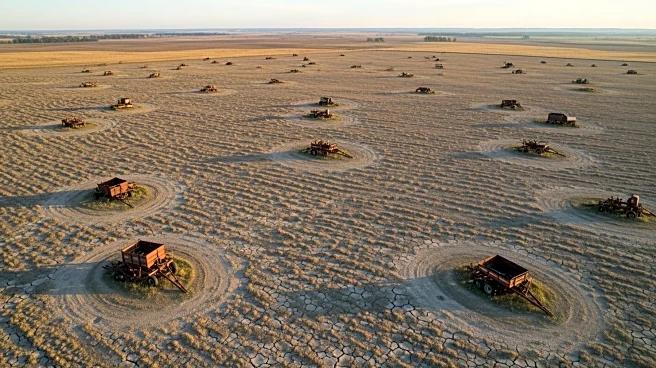




What's Happening?
The United States Department of Agriculture (USDA) reported a significant decline in the number of farms across the country, with a reduction of 15,000 farms in 2025, bringing the total to 1.865 million. This trend continues a longstanding pattern of decreasing
farm numbers, exacerbated by rising farm bankruptcies. Texas experienced the largest state-level decline, losing 2,000 operations. The Midwest also saw notable losses, with Minnesota losing 1,300 farms and Iowa 500. Despite these declines, Texas remains the state with the highest number of farms at 229,000. The report highlights that while farms with sales of $1 million or more saw a slight increase, smaller farms, particularly those with sales between $1,000 and $9,999, faced the largest losses. The total land in farms decreased by 0.3% to 873.95 million acres, pressured by urbanization and low returns per acre.
Why It's Important?
The reduction in farm numbers has significant implications for the U.S. agricultural sector and rural economies. The decline reflects broader economic challenges, including urbanization and financial pressures on small and mid-sized farms. The trend towards fewer, larger farms could lead to increased consolidation in the industry, potentially reducing competition and impacting local economies dependent on agriculture. The rise in farm bankruptcies signals financial distress among farmers, which could affect food production and prices. Additionally, the aging farmer population poses a challenge for the sustainability of farming operations, as older farmers may be less inclined to continue in the face of economic hardships.
What's Next?
The ongoing economic pressures suggest that further consolidation in the agricultural sector is likely. Policymakers and industry stakeholders may need to address the financial challenges facing small and mid-sized farms to prevent further declines. Strategies could include financial support, policy reforms, and initiatives to attract younger generations to farming. Monitoring the economic health of the agricultural sector will be crucial in the coming years to ensure food security and the vitality of rural communities.