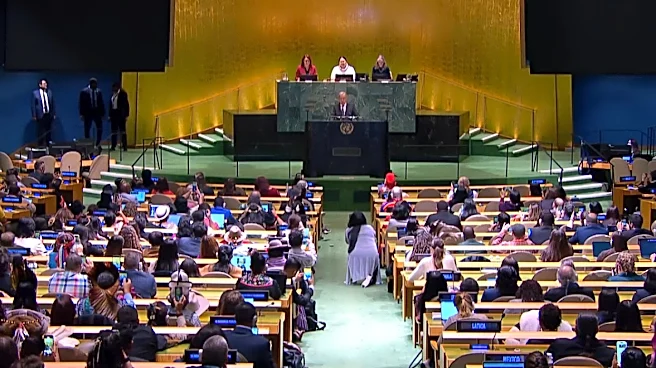

What's Happening?
A recent opinion piece highlights the perceived weakening of global institutions long before the current Middle East conflicts. The article argues that the rules-based international order has been compromised
by strategic interests over institutional integrity. It cites examples such as the lack of meaningful consequences for actions by countries like Iran, Russia, and China, which have violated international norms without facing significant repercussions. The piece suggests that the selective enforcement of international law has led to a system where compliance is optional for powerful states and mandatory for weaker ones.
Why It's Important?
The critique of global institutions underscores the challenges in maintaining a rules-based international order. The selective application of international law can undermine the credibility and effectiveness of these institutions, leading to a loss of trust among member states. This situation can exacerbate geopolitical tensions and hinder efforts to address global issues collaboratively. The article suggests that the current system favors powerful states, which could lead to further instability and conflict as emerging powers challenge the existing order.
Beyond the Headlines
The deeper implications of this critique involve the potential restructuring of international norms and institutions. As emerging powers gain influence, there may be a push to redefine the rules of global governance to reflect a more multipolar world. This shift could lead to a reevaluation of the role and authority of existing institutions, potentially resulting in new alliances and power dynamics. The article also raises ethical questions about the fairness and impartiality of the current system, which could influence future debates on international law and governance.