



What's Happening?
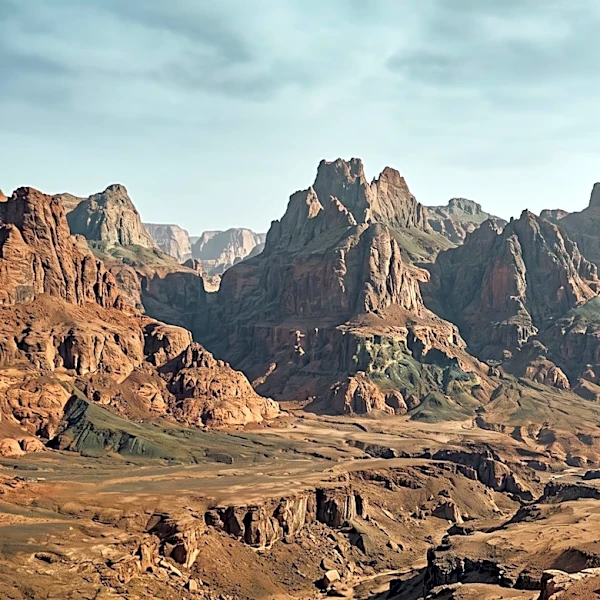
Researchers have discovered the first Denisovan radius (forearm bone) and additional hominin remains, including a mandible and teeth, in Bianfu Cave in Southwest China. These findings, detailed in a paper published in Nature, provide unprecedented insights
into the mysterious ancient relatives of humans. The remains were found in layers dated between 148,000 and 143,000 years old, with some specimens being even older, from 167,000 to 150,000 years ago. The team utilized a novel morphological pre-screening and ZooMS identification technique to efficiently analyze over 60,000 bone fragments from the cave. This method allowed them to confirm the Denisovan identity of the remains through unique amino acid variants. The discovery of these fossils in a region previously lacking such records helps to fill significant gaps in the understanding of Denisovan anatomy, adaptations, and geographical distribution across Asia.
Why It's Important?
This discovery is crucial for understanding the Denisovan species, which has remained largely enigmatic due to scarce fossil evidence. The forearm bone offers new data on their physical structure, suggesting a limb orientation similar to Neanderthals but with a shape closer to modern humans. This indicates distinct biochemical demands and adaptations compared to both Neanderthals and Homo sapiens. The Bianfu Cave is now considered a potentially significant site, possibly holding the largest fossil record for Denisovans outside of Denisova Cave in Siberia. This wealth of new data could revolutionize the understanding of Denisovan evolution, their interactions with other hominin species in East Asia, and their survival strategies during glacial periods, as the Yunnan-Guizhou Plateau region offered a relatively warm climate.
What's Next?
The ongoing research at Bianfu Cave is expected to yield more crucial data, potentially leading to a more complete picture of Denisovan anatomy and behavior. The novel identification technique developed by the research team could be applied to other Paleolithic sites, accelerating the discovery and identification of hominin fragments globally. Future studies will likely focus on further analyzing the morphology of the newly found remains, comparing them with existing Neanderthal and modern human fossils, and investigating the environmental conditions of the Yunnan-Guizhou Plateau during the Middle Pleistocene to understand how Denisovans adapted to their habitat. This could lead to a deeper understanding of hominin dispersal and adaptation across Asia.
Beyond the Headlines
The identification of Denisovan remains in Southwest China challenges previous assumptions about their geographical range and highlights the complex migratory patterns of ancient hominins. This discovery underscores the importance of regional fossil records in piecing together the broader narrative of human evolution, moving beyond the more studied sites in Siberia. The distinct biochemical characteristics observed in the Denisovan remains suggest unique evolutionary pathways and adaptations, potentially indicating a greater diversity within the Homo genus than previously understood. This could lead to a re-evaluation of the relationships between Denisovans, Neanderthals, and early modern humans, offering new perspectives on interbreeding events and the genetic legacy of these archaic groups in contemporary human populations.