





What's Happening?
South Sudan is intensifying its preparedness efforts against a potential outbreak of the Ebola Bundibugyo Virus Disease (BVD), with its national readiness level reaching 72.5 percent by the end of October. This comes as the World Health Organization (WHO)
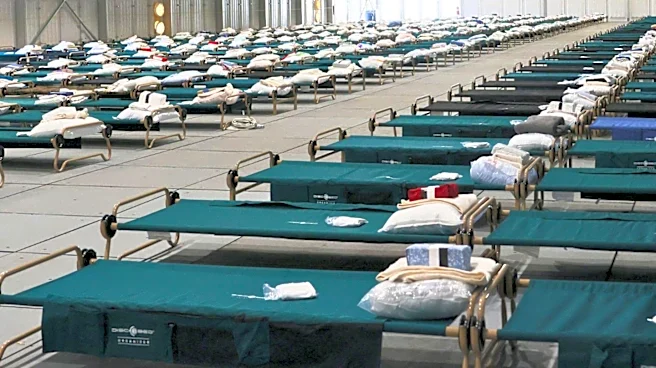
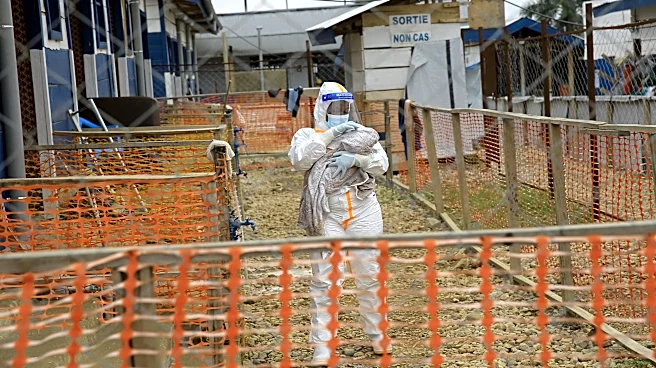
Regional Office for Africa increased the estimated risk of BVD importation into South Sudan from 67 percent in June to 99 percent in October 2026. The heightened risk is attributed to porous borders, cross-border trade, population movement, humanitarian displacement, and major transport corridors, particularly along the western and southern border areas with the Democratic Republic of Congo (DRC), where an ongoing BVD outbreak is occurring. Health authorities, with WHO support, are implementing measures such as strengthened surveillance, enhanced screening at healthcare facilities, expansion of alert management systems, reinforced laboratory preparedness, rapid response capacities, infection prevention and control, and community engagement. Between May and October 2026, 150 health workers were trained in Ebola case management in 15 priority counties, and temporary infectious diseases units were established.
Why It's Important?
The proactive measures taken by South Sudan and its partners are crucial for public health security in the region. A BVD outbreak could have devastating consequences, overwhelming an already fragile healthcare system and leading to significant loss of life. The high risk of importation underscores the interconnectedness of public health challenges across borders, particularly in areas with high population mobility. Effective preparedness not only protects South Sudan's population but also contributes to regional health stability by preventing wider spread. The investment in training healthcare workers, establishing isolation facilities, and strengthening surveillance systems is vital for early detection and containment, minimizing the socio-economic disruption that a large-scale epidemic would cause. The involvement of community leaders and local-language communication is key to building trust and ensuring public cooperation in prevention and response efforts.
What's Next?
Despite significant progress, further support is needed to address identified gaps in South Sudan's BVD preparedness. These include improving sub-national alert management protocols, contact management, proper sample packaging, patient flow and discharge protocols, chlorination, deployment of mobile laboratories, provision of personal protective equipment, safe referral of suspected BVD cases, and sustained screening and community engagement. A full-scale simulation exercise conducted in October 2026 indicated that while South Sudan can detect BVD, it cannot yet safely contain it. Continued investment and coordination among the Ministry of Health, the National Public Health Institute, WHO, and other partners are essential to close these remaining gaps and ensure that health workers can act quickly and effectively if a case is suspected. The focus will remain on intensifying readiness in counties bordering the DRC, while acknowledging the nationwide risk of BVD importation.
Beyond the Headlines
The ongoing efforts to prepare for a BVD outbreak in South Sudan highlight the broader challenges faced by nations with vulnerable health infrastructures and porous borders. This situation underscores the critical role of international cooperation and funding in global health security. The fear and anxiety among communities, as noted in Nabanga, also point to the importance of accurate and accessible risk communication to prevent misinformation, discrimination, and social unrest during health crises. The experience gained from this preparedness phase could serve as a model for future responses to emerging infectious diseases in similar contexts, emphasizing the need for integrated approaches that combine medical interventions with robust community engagement and cross-border collaboration. The long-term stability and development of South Sudan are intrinsically linked to its ability to manage such public health threats effectively.