





What's Happening?
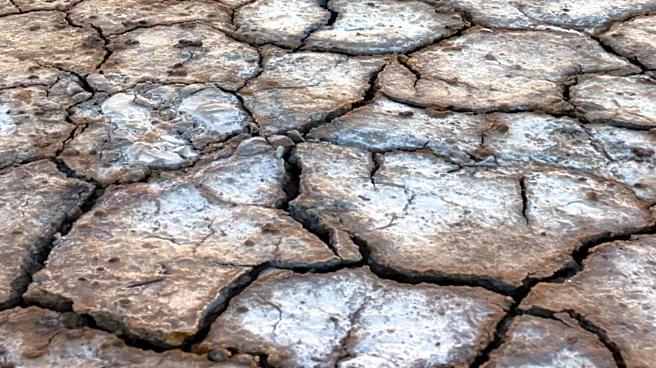
In the Netherlands, prolonged drought conditions are threatening the integrity of the country's dike system, which is crucial for flood defense. The drought has caused the peat-based dikes to dry out, weakening their structure and increasing the risk
of leaks. This situation is part of a broader European drought that has also affected river levels, notably the Rhine, which is a major freight route. As a result, cargo ships are forced to carry less freight to avoid running aground. The drought is also impacting agriculture, with restrictions on irrigation leading to concerns about reduced harvests and rising food prices.
Why It's Important?
The drought's impact on the dikes and river trade highlights the vulnerability of critical infrastructure to climate change. The Netherlands, with significant portions of its land below sea level, relies heavily on its dike system for protection against flooding. The weakening of these defenses poses a significant risk to both safety and economic stability. Additionally, the reduced capacity of river freight routes like the Rhine affects the supply chain, potentially leading to increased transportation costs and delays. This situation underscores the need for adaptive strategies in infrastructure and resource management to mitigate the effects of climate change.
What's Next?
Authorities in the Netherlands are likely to continue monitoring the dikes closely, employing both traditional methods and modern technology to detect and address vulnerabilities. In the long term, there may be increased investment in strengthening and adapting water management systems to cope with changing climate conditions. For the shipping industry, adjustments in logistics and freight management will be necessary to accommodate the reduced river capacity. Policymakers may also need to consider broader strategies for water conservation and distribution to balance the needs of agriculture, industry, and flood prevention.
Beyond the Headlines
The situation in the Netherlands serves as a case study for the broader challenges posed by climate change to infrastructure and resource management. It highlights the importance of integrating climate resilience into planning and development, particularly in regions vulnerable to extreme weather events. The economic implications extend beyond immediate logistical challenges, potentially affecting trade patterns and market dynamics. Furthermore, the social impact, particularly on communities reliant on agriculture and river trade, could lead to calls for policy interventions and support mechanisms.