



What's Happening?
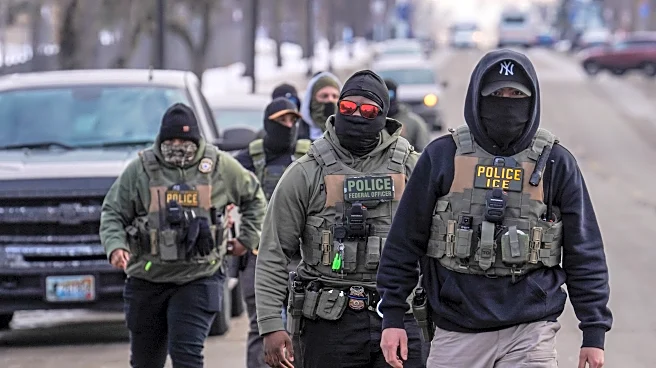
Los Angeles Mayor Karen Bass has issued an executive directive requiring LAPD officers to activate their body cameras during federal immigration enforcement operations. This move is part of a broader effort to document and potentially challenge the actions
of federal immigration agents in the city. The directive mandates that officers record the actions of immigration agents, document their supervisors, and report any misconduct. This policy builds on previous efforts to limit the city's cooperation with federal immigration enforcement. The directive also prohibits the use of city property by federal agents and imposes fees on private property owners who allow such use. The LAPD has a longstanding policy of non-involvement in immigration enforcement, and this directive reinforces that stance.
Why It's Important?
The directive highlights the ongoing tension between local and federal authorities over immigration enforcement. By requiring LAPD officers to document federal actions, the city aims to increase accountability and transparency in immigration operations. This move could influence other cities facing similar challenges, potentially leading to broader changes in how local law enforcement interacts with federal immigration agencies. The directive also reflects the city's commitment to protecting immigrant communities and resisting federal policies perceived as aggressive or unjust. However, it raises concerns about the potential strain on police resources and the effectiveness of such measures in holding federal agents accountable.
What's Next?
The implementation of this directive will likely be closely monitored by both supporters and critics. Immigrant rights advocates may push for further measures to protect communities, while federal agencies might respond with legal challenges or policy adjustments. The LAPD will need to address logistical challenges, such as managing the increased volume of body camera footage and ensuring compliance with the directive. The city's approach could serve as a model for other municipalities seeking to balance local autonomy with federal enforcement priorities.