








What's Happening?
The Office of Foreign Assets Control (OFAC) has imposed sanctions on Rwanda's Ministry of Defence and the Zigama Credit and Savings Society, a Rwandan financial institution. These sanctions were enacted due to their alleged role in facilitating Rwanda’s
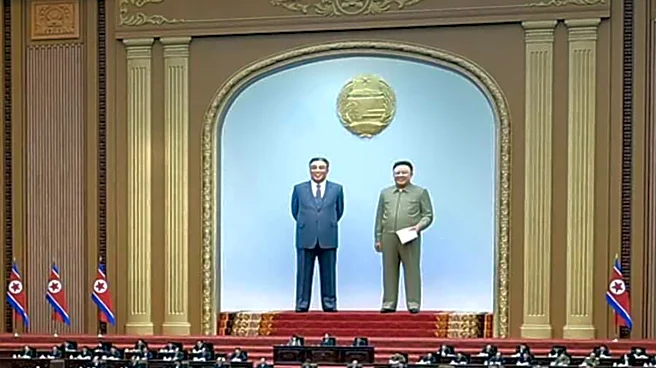
support for the March 23 Movement (M23) and its political wing operating in the eastern Democratic Republic of the Congo (DRC). This action by the U.S. Treasury aims to hold Rwanda accountable under the Washington Accords. Additionally, OFAC announced a $1.53 million settlement with Extreme Networks Inc. for nine apparent violations of Russia sanctions, involving the export of networking equipment and services to a blocked Russian defense manufacturer. The violations were voluntarily self-disclosed and deemed egregious. Furthermore, OFAC issued Iran General License FF-1, authorizing the wind-down of transactions involving the International Development Bank for Investment and Finance (Iraq Development Bank) and its majority-owned entities until December 1, 2026. This new license supersedes General License FF and mandates that payments to blocked persons be directed into blocked accounts. In a separate action, OFAC sanctioned 10 individuals and one entity for their involvement in North Korean government-run IT worker schemes, which defraud U.S. businesses and generate revenue for North Korea's weapons programs through fraudulent identities, cryptocurrency, and money laundering.
Why It's Important?
These sanctions underscore the U.S. government's commitment to enforcing international humanitarian law and combating illicit financial activities that undermine global stability. The sanctions against Rwanda's Ministry of Defence and Zigama Credit and Savings Society aim to pressure Rwanda to cease its support for the M23 group and withdraw its forces from eastern DRC, which is crucial for regional peace and stability in Central Africa. The settlement with Extreme Networks Inc. highlights the U.S. government's stringent enforcement of sanctions against Russia, signaling to U.S. businesses the severe consequences of non-compliance, especially concerning defense-related entities. The updated Iran general license provides a structured approach for winding down financial relationships, ensuring compliance while minimizing disruption to legitimate transactions. The targeting of North Korean IT worker schemes is vital for protecting U.S. businesses from fraud and disrupting funding streams for North Korea's illicit weapons programs, which pose a significant national security threat.
What's Next?
Following these sanctions, Rwanda will likely face increased international pressure to comply with the Washington Accords and cease its alleged support for the M23 group. The U.S. Treasury will continue to monitor Rwanda's actions in the DRC. For businesses, the Extreme Networks settlement serves as a reminder to enhance compliance programs to avoid similar penalties, particularly regarding exports to sanctioned entities. Financial institutions and businesses dealing with the International Development Bank for Investment and Finance must adhere strictly to the wind-down provisions of Iran General License FF-1 by the December 1, 2026 deadline. OFAC is expected to continue its efforts to identify and sanction individuals and entities involved in North Korean IT worker schemes, potentially leading to further designations and increased scrutiny of cryptocurrency transactions linked to such activities. The broader implication is a continued focus on enforcing sanctions to counter destabilizing actors and protect U.S. economic interests.
Beyond the Headlines
The sanctions against Rwanda highlight the complex geopolitical dynamics in the Great Lakes region of Africa, where proxy conflicts and resource exploitation often fuel instability. The U.S. action signals a stronger stance against external interference in regional conflicts, potentially influencing other state actors. The enforcement against Extreme Networks Inc. also underscores the growing sophistication of sanctions evasion tactics, particularly in the technology sector, and the need for robust due diligence by companies operating globally. The ongoing efforts to disrupt North Korean IT worker schemes reveal the evolving nature of state-sponsored illicit finance, moving beyond traditional banking systems to leverage digital currencies and remote work. This necessitates continuous adaptation of enforcement strategies and international cooperation to counter these sophisticated threats effectively. The cumulative effect of these actions reinforces the U.S.'s role as a global enforcer of financial integrity and international norms.