



What's Happening?
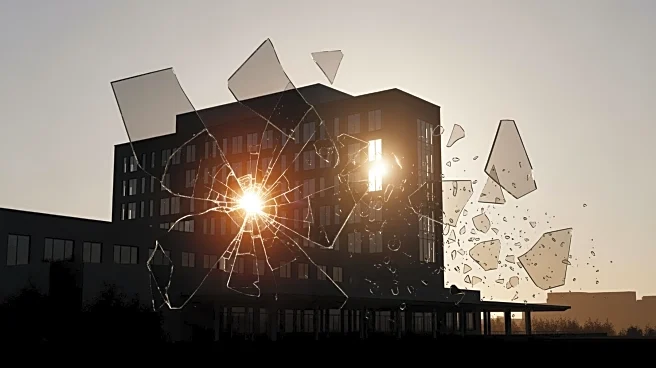
The Soroka Medical Center in Beersheva, Israel, is undertaking a significant fundraising effort to raise $475 million following a missile strike by an Iranian Sejjil ballistic missile. The attack, which occurred on June 19, severely damaged the hospital's
Northern Surgical Building and surrounding structures. Despite the extensive damage, no fatalities were reported, although there were injuries. The hospital's director, Dr. Shlomi Codish, has been actively seeking support from philanthropic foundations to rebuild and fortify the hospital. Notable contributions have come from the Koum Family Foundation, The Leona M. and Harry B. Helmsley Charitable Trust, and philanthropist Sylvan Adams, who pledged $100 million. The funds will be used to repair damaged wards, construct a new fortified building, and enhance the hospital's commitment to innovation and research.
Why It's Important?
The reconstruction of Soroka Medical Center is crucial for maintaining healthcare services for approximately one million people in the Negev region. The hospital's vulnerability to attacks highlights the need for fortified medical facilities in conflict-prone areas. The fundraising efforts not only aim to restore the hospital's infrastructure but also to ensure the safety and retention of medical staff, who are essential for providing continuous care. The involvement of international philanthropists underscores the global recognition of the hospital's strategic importance and the broader implications of regional security on healthcare infrastructure. Successful reconstruction could serve as a model for other hospitals in similar geopolitical contexts.
What's Next?
The next steps involve finalizing the fundraising efforts to meet the $475 million target. Dr. Codish is focused on attracting additional donations and recruiting talented physicians to strengthen the hospital's capabilities. The construction of the new fortified building, named 'Tekuma,' meaning rebirth, is a priority to ensure the hospital's resilience in future conflicts. The hospital administration is also negotiating with the Israeli government and healthcare providers for additional support. As the reconstruction progresses, the hospital aims to enhance its research and innovation initiatives, which are vital for its long-term strategic development.