



What's Happening?
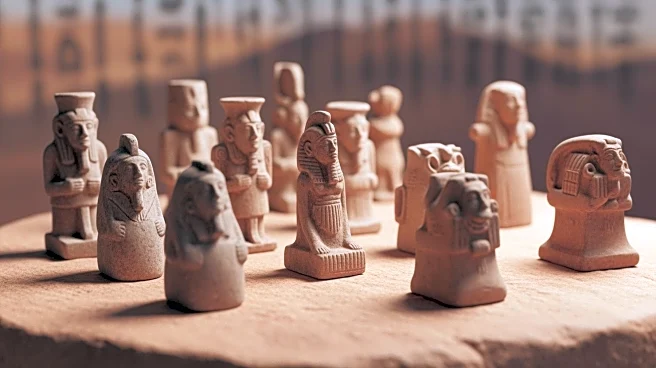
A team of archaeologists has discovered 225 funerary figurines in a tomb in Tanis, Egypt, solving a long-standing mystery about the burial site of Pharaoh Shoshenq III. The figurines, known as ushabti, were found arranged in a star shape and are believed
to serve as servants for the afterlife. This discovery is significant as it is the first of its kind in the Tanis necropolis since 1946 and provides new insights into ancient Egyptian burial practices.
Why It's Important?
The discovery sheds light on the burial customs and religious beliefs of ancient Egypt, particularly during the reign of Shoshenq III. It also highlights the historical significance of Tanis as a royal necropolis. The identification of Shoshenq III's burial site resolves a historical mystery and contributes to the understanding of Egypt's political history during a turbulent period. This find enhances the cultural and historical value of Egyptian archaeology and may attract further research and tourism.
Beyond the Headlines
The discovery raises questions about the burial practices and political dynamics of ancient Egypt. The presence of a large number of female figurines is unusual and may indicate unique cultural or religious practices. The relocation of Shoshenq III's burial site suggests possible political instability or looting concerns. This find underscores the importance of preserving archaeological sites and the potential for new discoveries to reshape historical narratives.