






What's Happening?
Governor Patrick Morrisey has announced over $3.3 million in critical water infrastructure funding for Beech Bottom in Brooke County, West Virginia. This investment is aimed at repairing essential water storage tanks and completing a long-awaited water main
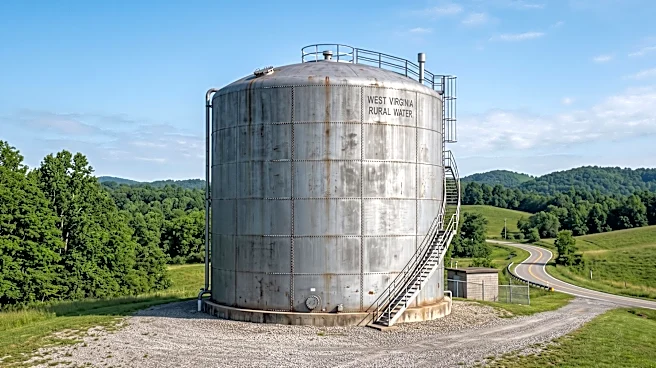
and fire hydrant project along Route 2. The funding package addresses two primary infrastructure needs: $283,000 will cover 100% of the costs to repair two water storage tanks serving approximately 550 local residents and industrial sites. Repairs to Tank 1's leaking valve will commence immediately, while Tank 2, which has been out of service due to a floor crack, will undergo full floor repairs over four to six weeks. Additionally, the state is contributing $400,000 from the Governor’s Civil Contingent Fund to complete a $3 million package for the Route 2 Water Main and Fire Hydrant Loop project. This state contribution resolves a multi-year delay caused by rising construction costs on a 2020 federal award, allowing construction to begin immediately. This project will close a critical loop in the village water system, preventing pressure drops during heavy industrial use and installing fire hydrants along the entire Beech Bottom Industrial Park.
Why It's Important?
This infrastructure investment is crucial for stabilizing water service and fostering economic development in West Virginia's Northern Panhandle. Governor Morrisey emphasized that reliable water infrastructure is a fundamental service necessary for success in the modern economy. Businesses and citizens consider basic services like infrastructure, healthcare, schools, and tax rates when deciding where to locate. By addressing these foundational needs, the state aims to attract new businesses and residents. The repairs to water storage tanks will ensure consistent water supply for both residential and industrial users, preventing service interruptions. The completion of the water main and fire hydrant project will enhance public safety by providing adequate fire suppression capabilities along the industrial park, which is vital for protecting assets and lives. This initiative is part of a broader statewide effort, with over $58 million in water and wastewater project packages recently finalized across West Virginia, signaling a significant commitment to improving essential services statewide.
What's Next?
With the funding secured, repairs to Tank 1's leaking valve will begin immediately, ensuring no service interruptions for residents. Tank 2's full floor repairs are scheduled to take four to six weeks once initiated. Construction on the Route 2 Water Main and Fire Hydrant Loop project is set to commence immediately, as the state's contribution has resolved previous funding impasses. These projects are expected to stabilize water service and enhance fire safety in Beech Bottom. The broader statewide push for water and wastewater infrastructure improvements will continue, with further project implementations anticipated across West Virginia. These ongoing efforts aim to modernize essential services, which Governor Morrisey believes will lay the groundwork for future economic growth and improved quality of life for residents.
Beyond the Headlines
The investment in Beech Bottom's water infrastructure highlights a broader strategic focus on foundational services as a catalyst for economic growth in West Virginia. Beyond the immediate benefits of improved water supply and fire safety, this initiative reflects a governmental understanding that basic utilities are critical determinants for business relocation and population retention. The resolution of a multi-year deadlock on the Route 2 project due to state intervention underscores the challenges of funding infrastructure in an environment of rising construction costs and the necessity of flexible state funds to bridge gaps. This approach could serve as a model for other rural areas facing similar infrastructure deficits, demonstrating how targeted investments in fundamental services can unlock broader economic potential and improve community resilience. The emphasis on 'fundamentals' suggests a long-term vision for sustainable development rather than short-term economic fixes.