



What's Happening?
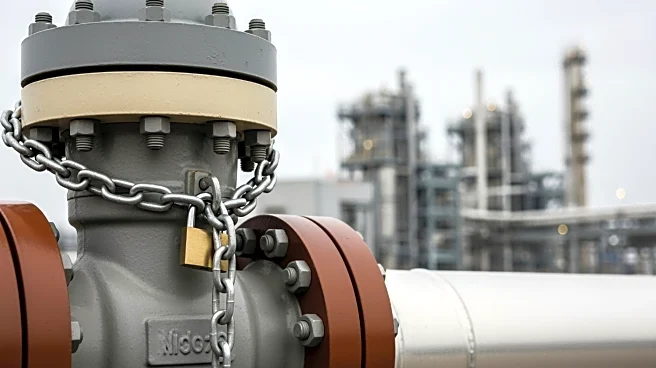
The European Union has officially agreed to cease all imports of Russian gas by the end of 2027. This decision, finalized by the ministers of the 27 EU member states, is part of a broader strategy to reduce the bloc's energy dependence on Russia, especially
in light of security concerns following Russia's invasion of Ukraine in 2022. The regulation mandates the cessation of Russian liquefied natural gas imports by the end of 2026 and pipeline gas by September 30, 2027. However, the deadline can be extended to November 1, 2027, if a member state struggles to meet its gas storage requirements from alternative sources before the winter season. The agreement was passed using a reinforced majority, bypassing the need for unanimous consent, which allowed it to proceed despite opposition from Hungary and Slovakia, countries still heavily reliant on Russian energy.
Why It's Important?
This move marks a significant shift in the EU's energy policy, aiming to enhance energy security and reduce geopolitical risks associated with reliance on Russian gas. The decision is expected to accelerate the diversification of energy sources within the EU, prompting member states to seek alternative suppliers and invest in renewable energy infrastructure. The ban could have substantial economic implications for Russia, which has historically been a major gas supplier to the EU. For EU countries, particularly those opposing the ban, the transition may pose economic challenges and require substantial investment in new energy infrastructure. The policy underscores the EU's commitment to energy independence and security in the face of geopolitical tensions.
What's Next?
EU member states are required to prepare national plans by March 1 to diversify their gas supplies and address potential challenges in replacing Russian gas. The EU will likely increase its engagement with alternative gas suppliers and invest in renewable energy projects to meet its energy needs. Hungary's decision to challenge the ban in the European Court of Justice could lead to legal proceedings, potentially affecting the implementation timeline. The EU's ability to maintain energy security during this transition will be closely monitored, especially as winter approaches and energy demand increases.