


What's Happening?
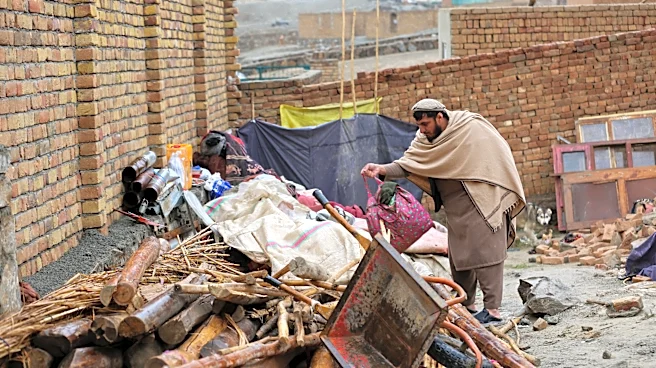
Afghanistan has experienced severe weather conditions, including widespread flooding, landslides, and lightning strikes, resulting in 77 deaths and 137 injuries over the past 10 days. The country's Disaster Management Authority reported significant damage,
with 793 homes destroyed and 2,673 damaged. Additionally, more than 200 miles of roads have been affected, impacting transportation and access to essential services. The extreme weather has also damaged businesses, agricultural land, water wells, and irrigation canals, affecting over 5,800 families. The Public Works Ministry has warned travelers to exercise caution on affected roads.
Why It's Important?
The severe weather in Afghanistan highlights the country's vulnerability to extreme weather events, exacerbated by its impoverished status. The destruction of infrastructure and homes poses significant challenges for recovery and rebuilding efforts. The impact on agricultural land and water resources threatens food security and livelihoods, potentially leading to long-term economic and social consequences. This situation underscores the need for improved disaster preparedness and response strategies to mitigate the effects of such events in the future.
What's Next?
With more rain forecasted, the Disaster Management Authority has advised the public to avoid riverbanks and flood-prone areas. Efforts to repair damaged infrastructure, such as roads and highways, are underway, but challenges remain due to the extent of the damage. The international community may need to provide assistance to support recovery efforts and address the humanitarian needs of affected families. Long-term strategies to enhance resilience against extreme weather events will be crucial for Afghanistan's future stability.