




What's Happening?
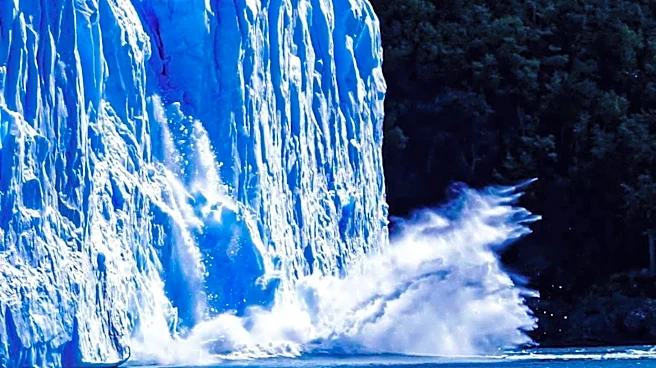
The Thwaites Glacier in Antarctica, often referred to as the 'Doomsday Glacier,' is showing signs of accelerated disintegration due to climate change. Recent satellite observations have revealed that its eastern ice shelf, which acts as a barrier preventing
the glacier from sliding into the ocean, is on the verge of detaching. This development is significant because the glacier contains enough ice to raise global sea levels by 65 centimeters if it completely melts. The potential collapse of Thwaites could trigger a chain reaction, causing additional glaciers in the West Antarctic Ice Sheet to collapse, potentially adding another 3.3 meters to global sea levels. The reduction in sea ice also means less solar radiation is reflected back into space, leading to further warming of the oceans and accelerating the melting process.
Why It's Important?
The potential collapse of the Thwaites Glacier poses a significant threat to global sea levels, which could have widespread implications for coastal regions around the world. In the U.S., rising sea levels could lead to increased flooding, erosion, and damage to infrastructure in coastal cities. The economic impact could be substantial, affecting real estate, insurance, and public infrastructure. Additionally, the accelerated warming of the oceans could exacerbate climate change effects, leading to more extreme weather events. This situation underscores the urgent need for global efforts to mitigate climate change and adapt to its impacts.
What's Next?
If the Thwaites Glacier continues to disintegrate, it could lead to a significant rise in global sea levels over the coming decades. This would necessitate urgent adaptation measures in coastal regions, including the U.S., to protect infrastructure and communities. Governments and organizations may need to invest in climate-resilient infrastructure and implement policies to reduce greenhouse gas emissions. The scientific community will likely continue to monitor the glacier closely to provide early warnings and inform policy decisions. Public awareness and individual actions to reduce carbon footprints could also play a role in addressing the broader issue of climate change.
Beyond the Headlines
The potential collapse of the Thwaites Glacier highlights the interconnectedness of global climate systems and the far-reaching impacts of climate change. It raises ethical questions about the responsibility of current generations to address climate change for the sake of future generations. The situation also emphasizes the importance of international cooperation in climate science and policy-making. Long-term shifts in global climate patterns could lead to changes in ecosystems, biodiversity, and human societies, necessitating a reevaluation of how we interact with the environment.