





What's Happening?
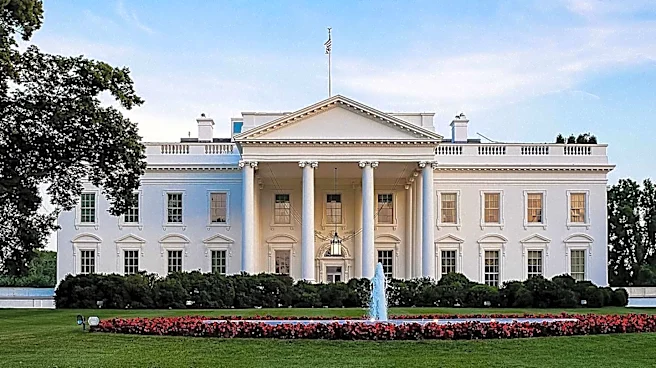
The White House has released a national AI policy framework that includes recommendations for Congress. These recommendations focus on creating regulatory sandboxes and expanding federal studies into AI-driven task realignment. This framework moves beyond
simply what AI can do, shifting scrutiny towards how institutions will govern changes in work processes due to AI integration. Many leadership teams currently view AI policy primarily as a legal review with associated training. However, the White House framework explicitly links task realignment and governance, suggesting a more comprehensive approach is needed. Senior people leaders are now tasked with understanding not just the existence of an AI policy, but also how work is being redesigned and who maintains accountability when AI is incorporated into workflows. The framework highlights that when AI alters the mix of tasks, it is crucial to identify where human judgment is being removed, where exceptions require review, and which roles are absorbing additional approval or managerial responsibilities. This diagnostic approach is intended to determine whether the actual need is for training, workflow support, policy adjustments, role redesign, or clearer decision rights, rather than simply scaling AI implementation without proper assessment.
Why It's Important?
This White House AI policy framework is important because it signals a significant shift in the U.S. government's approach to artificial intelligence, moving beyond technological adoption to focus on its profound impact on the workforce and organizational structures. By emphasizing task realignment and governance, the framework acknowledges that AI integration is not merely a technical challenge but a fundamental redesign of work. This has critical implications for U.S. industries, as companies will need to re-evaluate their operational models, job descriptions, and accountability structures. Businesses that fail to diagnose the true impact of AI on their workflows risk inefficient implementation, increased waste, and potential legal or ethical liabilities. The call for regulatory sandboxes suggests a proactive stance from the government to allow for controlled experimentation and development of AI technologies, which could foster innovation while mitigating risks. For employees, this framework underscores the need for reskilling and upskilling initiatives, as their roles and responsibilities are likely to evolve. Ultimately, this policy aims to ensure that the benefits of AI are realized responsibly, with clear lines of accountability and a focus on human-centric work design, thereby shaping the future of labor and productivity across the nation.
What's Next?
The White House's recommendations for Congress to create regulatory sandboxes and expand federal study of AI-driven task realignment indicate that legislative action and further research are anticipated. Businesses and organizations are expected to move beyond treating AI policy as a mere legal formality and instead engage in a deeper diagnosis of how AI impacts their operational workflows and accountability structures. This will likely involve a critical assessment of where human judgment is being replaced, where new review processes are needed, and how managerial loads are shifting. The framework suggests that training initiatives should follow a clear diagnosis of these changes, rather than being a default response. Stakeholders, including political leaders, businesses, and civil society groups, will likely engage in discussions and pilot programs to test and refine AI integration strategies. The emphasis on governance and accountability implies that future regulations or industry best practices may emerge to address the ethical and operational challenges posed by AI. Organizations that proactively address task redesign and clarify responsibility boundaries before investing heavily in AI learning will be better positioned to adapt to these evolving policy landscapes and ensure effective, responsible AI adoption.
Beyond the Headlines
The White House's AI policy framework delves into the deeper implications of artificial intelligence by highlighting the ethical and structural shifts it will trigger within the workforce. Beyond the immediate technical implementation, the framework implicitly addresses the potential for blurred responsibility in consequential workflows, which could lead to a weakening of review quality, escalation discipline, or decision quality. This raises significant ethical questions about accountability when AI systems make errors or produce unintended outcomes, especially in critical sectors. The emphasis on diagnosing where human judgment is removed and where exceptions require review points to a fundamental re-evaluation of human-machine collaboration and the value of human oversight. Culturally, this framework could catalyze a shift in how organizations perceive and manage their human capital, moving towards a model where continuous learning and role redesign become central to business strategy. The long-term shift could involve a redefinition of 'work' itself, with a greater focus on tasks requiring uniquely human skills like critical thinking, creativity, and emotional intelligence, while AI handles more routine or data-intensive processes. This policy framework, while not yet binding regulation, sets a precedent for a more thoughtful and human-centered approach to AI integration, aiming to prevent the scaling of waste and ensure that technological advancement serves societal well-being.