




What's Happening?
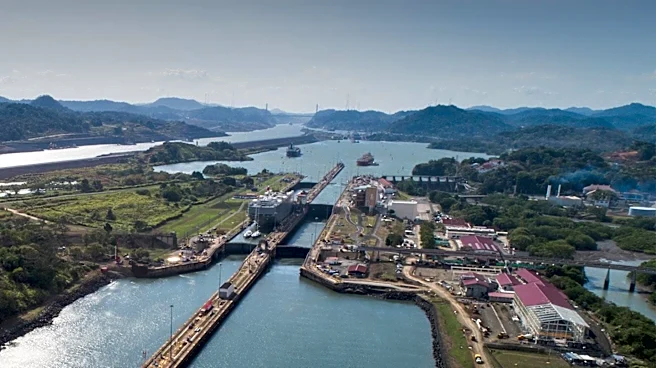
The Panama Canal is implementing restrictions on daily ship transits and vessel drafts due to a severe drought exacerbated by the El Nino climate phenomenon. Starting Friday, the canal will reduce daily traffic from 36 to 32 ships, and the permitted draft of
vessels will decrease from 15.24 meters to 14.63 meters. This marks the second time such restrictions have been imposed, with the drought expected to last until mid-2027. Panama has declared an emergency over El Nino, which causes global changes in winds and rainfall and erratic weather conditions. The canal, which connects the Pacific and Atlantic Oceans and handles five percent of global trade, relies on freshwater from rainfall stored in artificial lakes for its lock operations. Each transiting ship requires approximately 200 million liters of water, which is then discharged into the sea. The accumulated rainfall deficit between April and August was 35.8 percent below the historical average, with no short-term recovery signs. Forecasts suggest the 2027 dry season will begin earlier and extend longer than usual.
Why It's Important?
The restrictions on the Panama Canal have significant implications for global trade and U.S. consumers. Reduced vessel drafts mean ships will carry less cargo, leading to increased shipping costs and longer waiting times for goods. This could result in higher prices for consumers, as noted by Rebecca Bill Chavez, president of the Inter-American Dialogue. A 30-centimeter draft decrease can lead to a loss of around 200 containers for large vessels, significantly impacting the container sector, which is the canal's primary revenue source. The route is crucial for trade between China, South Korea, Japan, and the United States, with seven out of ten containers passing through the canal originating from or destined for the U.S. Rising costs could directly affect U.S. trade, potentially leading to economic repercussions. The situation also highlights the vulnerability of critical global supply chains to climate phenomena and underscores the need for resilient infrastructure and alternative trade routes.
What's Next?
Further restrictions on canal transits could be implemented if the lakes do not replenish sufficiently in November, according to former canal administrator Jorge Quijano. The canal authority plans to construct a new 4,600-hectare reservoir on the Indio River to mitigate the effects of future droughts, but this project is not expected to be completed before 2031. In the short term, shipping companies like Maersk are monitoring the situation, though they consider it too early to speculate on the full impact. The ongoing difficulties in the Panama Canal, coupled with other global shipping challenges, such as those in the Strait of Hormuz, are expected to continue putting pressure on global supply chains. The U.S. government and businesses will likely need to assess the potential for increased shipping costs and delays, possibly exploring alternative logistics or routes to minimize disruptions.
Beyond the Headlines
The Panama Canal's water crisis extends beyond trade, as its watershed also supplies drinking water to half of Panama's 4.6 million inhabitants, utilizing infrastructure designed almost a century ago. This dual demand for water for both shipping and human consumption creates a complex challenge, especially under prolonged drought conditions. The situation underscores the broader issue of water scarcity driven by climate change and its potential to impact not only economic activities but also public health and daily life in affected regions. The reliance on a single, aging infrastructure for both critical functions highlights the need for comprehensive water management strategies and investments in modern, resilient water systems to adapt to changing climate patterns. The event also serves as a stark reminder of how interconnected global trade and local environmental conditions are, with far-reaching consequences for international commerce and national well-being.