







What's Happening?
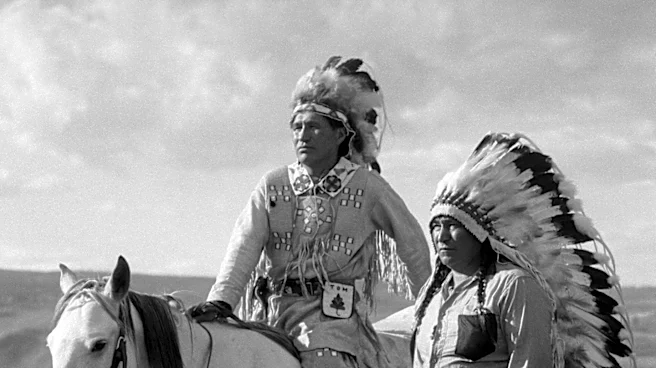
The early American Republic, from the 1790s to the early 1800s, was a period marked by significant westward migration, evolving national identity, and persistent conflicts with Native nations. Following the American Revolution, settlers rapidly moved
across the Appalachians into areas like Kentucky and Tennessee, often seeking cheap land. This expansion led to clashes with Native nations, particularly north of the Ohio River. The Western Confederacy, an alliance of Shawnee, Miami, and Delaware nations, successfully defeated U.S. armies in 1790 and 1791, including a significant defeat of Arthur St. Clair's army. However, the tide turned with General Anthony Wayne's victory at the Battle of Fallen Timbers in 1794. This, coupled with Britain's agreement in Jay's Treaty (1794) to evacuate its western forts, weakened Native resistance. Consequently, the Treaty of Greenville in 1795 saw twelve Native nations cede most of present-day Ohio to the United States. Concurrently, the nation grappled with the institution of slavery; northern states began gradual abolition, while the invention of the cotton gin in 1793 made upland cotton profitable, leading to the expansion of slavery in the South and West and a growing domestic slave trade. Efforts to forge a national culture saw figures like Noah Webster advocating for an American English and neoclassical architecture influencing public buildings, yet regional differences persisted.
Why It's Important?
This period was foundational in shaping the territorial and social landscape of the United States. The relentless westward expansion, driven by the promise of cheap land, established a pattern of displacement and conflict with Native American populations that would continue for decades. The military victories and subsequent treaties, such as the Treaty of Greenville, were crucial in securing vast tracts of land for American settlement, solidifying the nation's control over the Ohio Country. This expansion, however, came at the cost of Native sovereignty and traditional lands, leading to profound and lasting impacts on indigenous communities. The contrasting developments regarding slavery—gradual abolition in the North versus its entrenchment and expansion in the South due to the cotton gin—laid the groundwork for the deep sectional divisions that would eventually lead to the Civil War. The growth of the domestic slave trade, often splitting families, highlights the severe human cost of this economic development. Furthermore, the attempts to define an American identity through language and architecture, while grappling with the realities of slavery and Native American displacement, reveal the complex and often contradictory ideals of the nascent republic. These events established precedents for federal power, land acquisition, and the enduring struggle over civil rights and equality.
What's Next?
The patterns established during this era continued to unfold in subsequent decades. The westward migration would persist, leading to further conflicts and treaties with Native American tribes as the U.S. expanded its borders. The issue of slavery, exacerbated by the economic incentives of cotton production, would become an increasingly contentious national debate, eventually leading to legislative compromises and ultimately, civil war. The legal and social frameworks for citizenship, initially restricted to 'free white persons' by the Naturalization Act of 1790, would face challenges and reforms over time, reflecting evolving understandings of national identity and inclusion. The development of a distinct American culture, while drawing from European influences, would continue to evolve, incorporating diverse regional and social experiences. The federal government's assertion of authority, demonstrated in events like the Whiskey Rebellion, would solidify its role in maintaining order and enforcing national laws across its expanding territory. The legacy of land cessions and broken treaties with Native nations would continue to be a source of historical grievance and ongoing legal and political discussions regarding indigenous rights and reparations. The economic disparities and social structures rooted in this period would influence American society for generations.
Beyond the Headlines
Beyond the immediate territorial gains and political developments, this era laid the ethical and moral foundations for many of America's enduring challenges. The concept of a 'new man' in America, as described by Crèvecoeur, often overlooked the experiences of Native Americans and enslaved Africans, whose lives were profoundly shaped by the expansionist and racial policies of the time. The forced displacement of Native nations and the expansion of slavery represent profound moral failings that continue to resonate in contemporary discussions about historical justice and systemic inequality. The actions of individuals like William Wells, who fought for both Native nations and the U.S., highlight the complex loyalties and personal dilemmas faced during a period of intense cultural collision. The early legal frameworks, such as the Naturalization Act of 1790, codified racial discrimination into law, establishing a precedent for exclusionary practices that would take centuries to dismantle. The economic engine of cotton, fueled by enslaved labor, created immense wealth but also entrenched a brutal system that contradicted the nation's stated ideals of liberty and equality. This period underscores the tension between the aspirational rhetoric of the American Revolution and the harsh realities of its implementation, revealing the deep-seated contradictions that continue to shape American identity and its ongoing quest for a more perfect union.