





What's Happening?
Worcester County residents are being advised on crucial steps to prevent frozen pipes as winter approaches. The advice, provided by Worcester County News, emphasizes four key actions: draining outdoor spigots, insulating pipes in unheated areas, maintaining
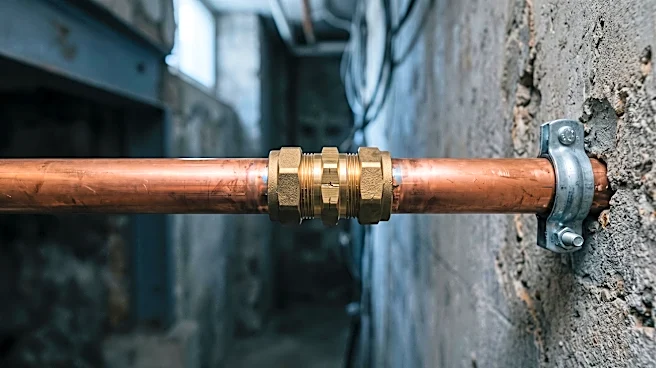
indoor temperatures at 55°F or higher, and allowing faucets to drip on the coldest nights. The American Red Cross identifies pipes in unheated basements, crawlspaces, attics, garages, and those along exterior walls as most at risk. Residents are also urged to locate their main water shut-off valve and ensure it is functional to mitigate damage in case of a burst pipe.
Why It's Important?
Preventing frozen pipes is vital for homeowners in Worcester County to avoid significant property damage and costly repairs. A burst pipe can lead to extensive water damage, mold growth, and disruption of essential services, impacting both financial stability and quality of life. Insurance policies may also limit or deny claims if a house was not adequately heated, adding another layer of financial risk. Proactive measures not only protect individual homes but also reduce the strain on local plumbing services during peak winter emergencies. This guidance is particularly important for older homes common in the region, which may have more vulnerable plumbing systems.
What's Next?
Residents are encouraged to implement these preventative measures before the onset of severe cold weather. If a pipe freezes but does not burst, the recommended thawing methods include using a hair dryer, heating pad, or hot towels, while strictly avoiding open flames. In the event of a burst pipe, residents should immediately shut off the main water valve and contact a professional plumber. Heritage Home Service, endorsed by Worcester County Trusted, is highlighted as a local resource for plumbing needs, offering services and maintenance plans to help residents prepare for and respond to winter plumbing issues.
Beyond the Headlines
The issue of frozen pipes extends beyond immediate home maintenance, touching upon broader themes of climate resilience and community preparedness. As weather patterns become more unpredictable, the importance of robust infrastructure and informed public action grows. This guidance also underscores the role of local businesses, like plumbing services, in community support and disaster mitigation. Furthermore, it highlights the need for homeowners to understand their insurance policies thoroughly, as the financial burden of unexpected events can be substantial. Proactive community-wide education on such practical matters can significantly enhance overall resilience against environmental challenges.