




What's Happening?
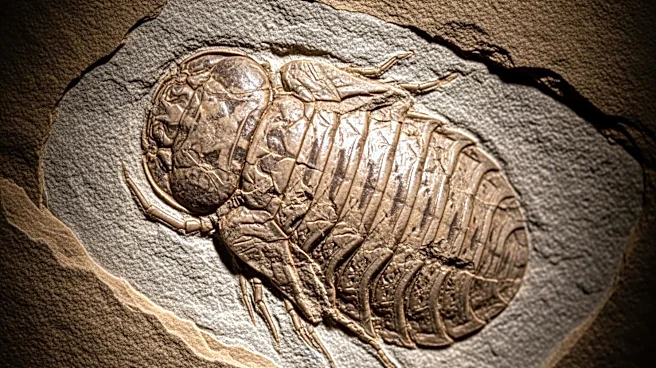
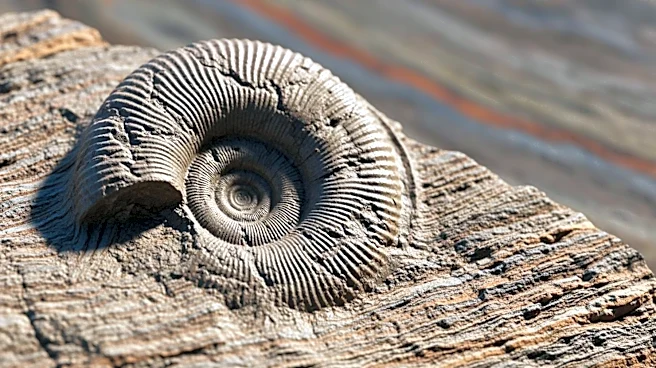
Newly discovered fossils from southwestern China suggest that complex life evolved millions of years earlier than previously believed. The fossils, found at the Jiangchuan Biota site in Yunnan province, date back to the Ediacaran period (635 million to 542
million years ago). This discovery challenges the long-held belief that complex animal life emerged during the Cambrian period, known for its explosion of fauna diversity. The fossils include goblet-shaped sea jelly relatives, wormlike animals, and segmented sea creatures, preserved in exquisite detail. The findings indicate that complex animal life, including potential ancestors of vertebrates, existed at least 4 million years before the Cambrian. The research, published in the journal Science, provides new insights into the evolution of life on Earth.
Why It's Important?
The discovery of complex life forms from the Ediacaran period has significant implications for understanding the evolution of life on Earth. It challenges the traditional view that complex animal life began during the Cambrian explosion, suggesting that evolutionary processes were already underway millions of years earlier. This finding reshapes scientific understanding of the timeline of life's development and the conditions that supported early complex organisms. The fossils provide valuable evidence of bilateral symmetry, a trait common in modern animals, indicating that it evolved before the Cambrian. The research also highlights the importance of fossil preservation in uncovering details about ancient life forms, offering insights into the biology and ecology of early animals.
What's Next?
The discovery of these fossils opens new avenues for research into the evolution of complex life. Scientists will continue to study the Jiangchuan Biota site to understand the conditions that led to the exceptional preservation of these fossils. Further analysis of the fossils may reveal more about the biology, habits, and interactions of these early animals, providing insights into the evolutionary history of vertebrates and other complex organisms. The research may also prompt reevaluation of other fossil sites from the Ediacaran period, potentially uncovering additional evidence of early complex life. As scientists explore these findings, they will gain a deeper understanding of the evolutionary processes that shaped life on Earth.
Beyond the Headlines
The discovery of complex life from the Ediacaran period challenges existing scientific paradigms and encourages researchers to reconsider the timeline of life's evolution. It highlights the importance of interdisciplinary collaboration in paleontology, combining expertise in biology, geology, and evolutionary science. The findings also underscore the potential for international research teams to uncover significant scientific insights, as the study involved collaboration between scientists from China and the UK. As research continues, the implications for understanding the origins and evolution of life will be profound, potentially reshaping scientific inquiry and exploration. The study contributes to the broader knowledge of Earth's history and the processes that led to the diversity of life we see today.