



What's Happening?
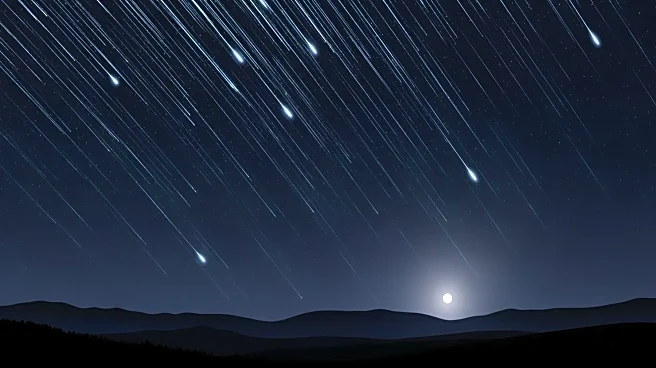
The Quadrantids meteor shower, known for its brief but intense peak, is set to reach its maximum intensity on January 3, 2025. According to the American Meteor Society, the shower officially begins on December 28 and lasts until January 12. During its peak, the Quadrantids can produce
up to 125 meteors per hour, rivaling other major meteor showers like the Perseids. This meteor shower is unique as it originates from the 2003 EH1 asteroid, unlike most meteor showers that are fed by comets. The peak is expected to start around 4 p.m. ET and last for about six hours, offering a short window for optimal viewing.
Why It's Important?
The Quadrantids meteor shower is significant for astronomy enthusiasts and the general public as it provides a rare opportunity to witness a high number of meteors in a short period. The shower's origin from an asteroid rather than a comet adds scientific interest, offering insights into the composition and behavior of near-Earth objects. The event also highlights the importance of dark sky preservation, as light pollution can significantly hinder the viewing experience. The timing of the Quadrantids, coinciding with the Wolf Moon, presents challenges due to increased light pollution, potentially reducing the number of visible meteors.
What's Next?
Skywatchers are advised to find locations away from city lights to maximize their chances of seeing the Quadrantids. The American Meteor Society and NASA suggest trying to view the shower on both January 2 and 3, as predictions vary slightly. The presence of the Wolf Moon, a supermoon, may impact visibility, so observers should manage expectations regarding the number of meteors they might see. The event underscores the ongoing need for public awareness about light pollution and its effects on astronomical observations.