



What's Happening?
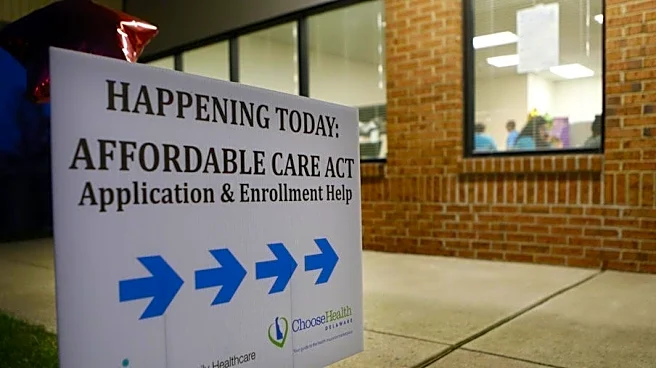
President Trump's administration is set to begin sending $500 refund checks to nearly one million Americans starting September 30. These checks are intended for individuals who, according to the administration, were overcharged through the Affordable
Care Act's (ACA) federal exchange for health insurance. The Treasury Department will issue these checks, accompanied by letters signed by President Trump, to over 950,000 Americans across 30 states. The White House asserts that the Biden administration collected user fees from health insurance companies, which were passed on to consumers through higher premiums, and that these premiums exceeded the operational costs of HealthCare.gov. President Trump's letter states that this money rightfully belongs to hard-working Americans and is now being returned to them. The initiative comes approximately five weeks before the November midterm elections, amidst public concerns over high costs and affordability.
Why It's Important?
This action by President Trump's administration carries significant political and economic implications. The distribution of $500 checks to nearly a million Americans could be perceived as a direct financial relief measure, potentially influencing voter sentiment ahead of the November midterm elections. By framing the refunds as rectifying an 'overcharge' by the previous administration, President Trump is directly addressing a key concern for many voters: the cost of healthcare and the perceived inefficiencies of government programs. This move could bolster support for Republican candidates by demonstrating a tangible effort to reduce financial burdens on citizens. Conversely, critics might view this as a politically motivated maneuver, especially given its timing close to the elections. The initiative also highlights ongoing debates about the funding and administration of the Affordable Care Act, and the role of federal versus state control over health insurance exchanges. The fact that only 30 states will receive these checks, specifically those relying on federal exchanges, underscores the fragmented nature of ACA implementation across the U.S. and could lead to further discussions about equitable distribution of benefits.
What's Next?
The distribution of these $500 checks will commence on September 30, with nearly one million Americans in 30 states expected to receive them. The accompanying letters from President Trump will likely reinforce the administration's narrative regarding healthcare costs and accountability. This action is anticipated to generate further political discourse, particularly as the midterm elections approach. Political leaders and campaigns will likely use this event to either commend the administration for providing financial relief or criticize it as a pre-election tactic. The impact on voter behavior will be closely watched, especially in the 30 states where recipients are located. Additionally, the initiative may reignite discussions about the future of the Affordable Care Act, potential reforms, and the balance between federal and state responsibilities in healthcare administration. The White House's assertion that the Biden administration 'overcharged' Americans could also lead to further scrutiny and debate over past and current healthcare policies.
Beyond the Headlines
Beyond the immediate financial relief and political implications, this action touches upon deeper issues concerning government accountability and the public's perception of healthcare costs. The narrative presented by President Trump's administration—that Americans were 'overcharged' and are now receiving their money back—frames the government as a direct financial actor in citizens' lives, capable of both imposing costs and providing refunds. This could set a precedent for how future administrations address perceived financial grievances related to federal programs. Ethically, the timing of the refunds so close to an election raises questions about the use of government funds for political advantage, regardless of the stated justification. Legally, the basis for determining an 'overcharge' and the mechanism for refunding it under the ACA framework could face scrutiny. Culturally, this event reinforces the ongoing national conversation about healthcare affordability and the role of government in managing it, potentially influencing public trust in federal institutions and their handling of complex social programs.