



What's Happening?
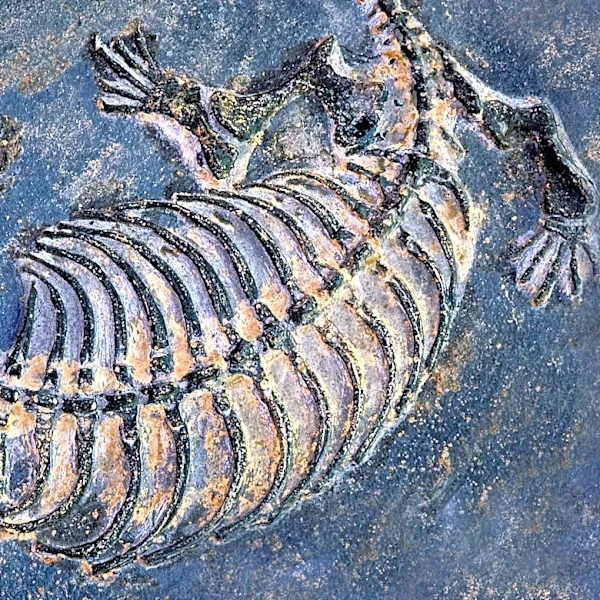
Researchers from Yunnan University and the University of Leicester have uncovered the earliest known evidence of structures that evolved into spider fangs, found in a 518-million-year-old fossil. This discovery was made at the Chengjiang fossil site in Yunnan Province,
China. The fossil belongs to a small marine creature named Urokodia, which lived during the early Cambrian Period. Urokodia is part of the chelicerates group, which includes spiders, scorpions, and ticks. The fossil revealed pincer-like appendages, an early form of chelicerae, which are specialized appendages that function as pincers or fangs in modern chelicerates. This finding provides insight into the evolutionary history of these creatures, showing that their ancestors were already equipped with hunting tools hundreds of millions of years ago.
Why It's Important?
The discovery of Urokodia's fossil is significant as it sheds light on the evolutionary history of chelicerates, a group that includes over 100,000 species today. Understanding the origins of spider fangs helps scientists trace the development of these creatures' hunting mechanisms, which have made them successful predators in both marine and terrestrial environments. This research not only enhances our knowledge of ancient ecosystems but also contributes to the broader understanding of animal evolution. The preservation of soft anatomy in the fossil allows for detailed studies of early life forms, offering a window into the dawn of animal life on Earth.