







What's Happening?
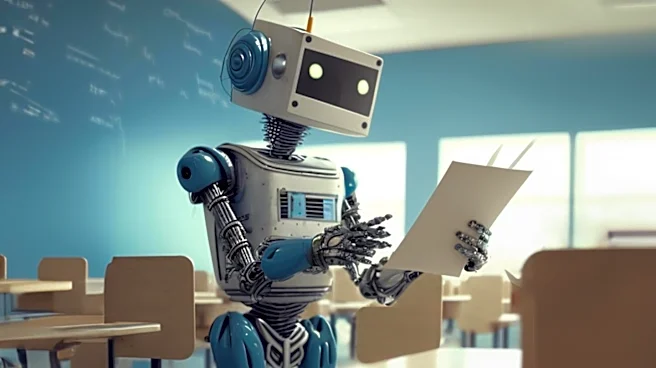
U.S. school principals are increasingly adopting artificial intelligence tools to streamline administrative tasks, improve student support, and enhance teacher efficiency. Derek Cantrell, principal of Allegheny High School in Covington, Virginia, has
used AI to create custom tools for tracking teacher observations, planning professional development, and monitoring student graduation requirements. He also brainstormed with Google's AI suite to develop a system for reducing absenteeism, which tracks unexcused absences and tardies, and offers students opportunities to 'earn back' good standing through tasks like lunch detentions. Similarly, Sterling Seeman, principal of Springer Middle School in Wilmington, Delaware, created AI prompts to help teachers draft their yearly goals, while Rachel Jensen, principal of Idaho Home Learning Academy, uses automated tools to create tracking sheets for online students, consolidating information on individual needs and accommodations. These applications move beyond initial uses like drafting emails to more strategic implementations aimed at operational improvements.
Why It's Important?
The integration of AI into school administration is significant because it addresses long-standing challenges in the U.S. education system, such as heavy administrative burdens on principals and teachers, and the need for more personalized student support. By automating repetitive tasks, AI frees up educators' time, allowing them to focus more on direct interaction with students and professional development. This shift can lead to improved student outcomes, as seen in Cantrell's absenteeism reduction program, which offers positive incentives. For online schools, AI tools are particularly crucial for managing large student populations and ensuring consistent communication and tracking of individual progress. However, this adoption also highlights the need for careful consideration of data privacy and security, as principals must ensure student data remains localized and safe from public domains. The cautious yet innovative approach by these principals demonstrates a pragmatic embrace of AI's potential to transform educational management.
What's Next?
As principals continue to explore and implement AI solutions, the next steps will likely involve further development of secure, localized AI tools that can be tailored to specific school needs. There will be an ongoing emphasis on balancing the benefits of AI-driven efficiency with the importance of human connection and critical thinking skills. Educators will need to establish clear guidelines for AI use by both staff and students, ensuring that AI serves as a supportive tool rather than a replacement for essential human judgment and interaction. The experiences of early adopters like Cantrell, Seeman, and Jensen will provide valuable case studies for other schools considering AI integration. Furthermore, the education technology market is expected to see an increase in AI-powered solutions designed specifically for school administration and student management, prompting discussions around best practices, ethical considerations, and professional development for educators in leveraging these new technologies effectively.
Beyond the Headlines
The adoption of AI in schools, while promising for operational efficiency, carries deeper implications for the pedagogical approach and the development of future generations. The challenge lies in fostering a learning environment where students can harness AI's capabilities for research and creative problem-solving without becoming overly reliant on it, which could dull critical thinking and analytical skills. Principals are grappling with how to teach students to navigate AI responsibly, recognizing its role in future job opportunities while also emphasizing the importance of human verification and understanding of AI outputs. This necessitates a re-evaluation of curriculum design to include AI literacy and ethical considerations. Moreover, the use of AI in tracking student behavior and academic progress raises ethical questions about surveillance, bias in algorithms, and the potential for disproportionate impact on certain student populations. The long-term success of AI integration in education will depend not just on technological advancement, but on a thoughtful and balanced approach that prioritizes student well-being, equitable access, and the cultivation of essential human skills.