
What's Happening?
The United Nations Environment Programme (UNEP) has designated 'Beat Plastic Pollution' as the theme for World Environment Day 2024, highlighting the urgent need to address the global plastic crisis. Over
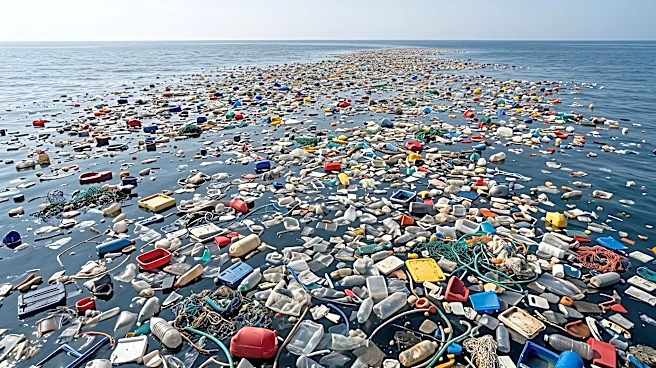
400 million tonnes of plastic are produced annually, with half being single-use, and only 9% of all plastic ever made has been recycled. This waste chokes oceans, contaminates soil, and enters food chains, with microplastics even detected in human blood. In response, 175 nations adopted a resolution in March 2022 to negotiate a legally binding Global Plastics Treaty, with a target for completion by the end of 2024. This treaty aims to address the entire lifecycle of plastic, from polymer production to waste management. The Intergovernmental Negotiating Committee (INC) is holding meetings throughout 2024, including INC-4 in Ottawa and INC-5 in Busan, to finalize the treaty. Key discussion points include production caps versus waste management focus, chemical transparency, a just transition for waste pickers, and financing mechanisms.
Why It's Important?
The global plastics crisis poses significant environmental, health, and economic challenges. The accumulation of plastic waste, particularly microplastics, has far-reaching consequences for ecosystems and human health. Economically, marine plastic pollution alone is estimated to cause $2.5 trillion in annual ecosystem damage. The proposed Global Plastics Treaty is crucial for establishing a unified international framework to combat this issue, moving beyond fragmented national policies. Its success could lead to a significant reduction in plastic production and waste, fostering a more circular economy. For U.S. industries, this treaty could necessitate changes in manufacturing processes, packaging, and waste management practices, potentially driving innovation in sustainable materials and recycling technologies. Companies that proactively adapt to these changes could gain a competitive advantage, while those that resist may face increased regulatory burdens and public scrutiny. The treaty also has implications for global trade and supply chains, as harmonized standards could simplify compliance for businesses operating internationally.
What's Next?
The Intergovernmental Negotiating Committee (INC) will continue its meetings throughout 2024, with INC-4 in Ottawa and INC-5 in Busan, to finalize the Global Plastics Treaty. The outcome of these negotiations will determine the scope and enforceability of the treaty, particularly regarding production caps and waste management strategies. Stakeholders, including governments, businesses, and civil society groups, will closely monitor these discussions. Following the treaty's finalization, individual nations, including the U.S., will need to ratify and implement its provisions, which could involve developing new domestic legislation, regulations, and enforcement mechanisms. Businesses will likely begin assessing their operations to align with the treaty's requirements, potentially investing in research and development for alternative materials, improving recycling infrastructure, and adopting more sustainable packaging solutions. There will also be ongoing efforts to combat greenwashing and ensure that claims of sustainability are verifiable and impactful.
Beyond the Headlines
The Global Plastics Treaty represents a pivotal moment in addressing environmental sustainability, with deeper implications beyond immediate waste management. Ethically, it confronts the responsibility of industrialized nations and corporations for the pervasive plastic pollution, often disproportionately affecting developing countries and marginalized communities. The concept of a 'just transition' for waste pickers, who are often informal workers, highlights the social equity dimension of environmental policy. Legally, the treaty could establish new precedents for international environmental law, potentially influencing future agreements on other global environmental challenges. Culturally, the 'Beat Plastic Pollution' movement aims to shift consumer behavior and societal norms away from single-use plastics towards a more conscious consumption model. The long-term success of the treaty will depend not only on its legal enforceability but also on a fundamental shift in how societies perceive and interact with plastic, fostering a culture of reuse, reduction, and circularity. This could lead to significant innovation in material science and business models, driving a broader transition towards a more sustainable global economy.