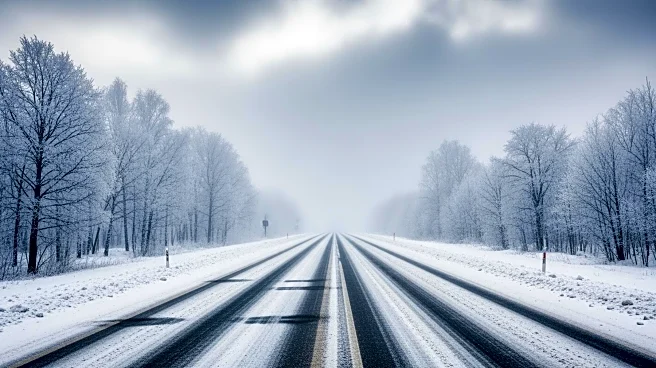




What's Happening?
A severe winter storm has swept across Europe, bringing heavy snow, wind, and ice, which have significantly disrupted travel and daily life. The storm has led to the cancellation of hundreds of flights at major airports, including Paris' Charles de Gaulle
and Orly, and Amsterdam's Schiphol. In France, the storm has caused massive traffic jams and forced trucks off the roads due to dangerous conditions. The Netherlands has also experienced significant disruptions, with Amsterdam's rail system facing turmoil due to frozen points and software glitches. The storm has resulted in at least six deaths, including five in France. In the Balkans, heavy snow and rain have swollen rivers, causing traffic problems and power and water supply disruptions. The storm has also affected Sweden, Finland, and the UK, where temperatures have plummeted, and snow has disrupted rail, road, and air travel.
Why It's Important?
The storm's impact on travel and infrastructure highlights the vulnerability of European countries to severe weather events, which can have significant economic and social consequences. The disruption of air travel affects not only passengers but also the logistics and supply chains that rely on timely transportation. The economic impact is compounded by the costs associated with emergency measures and repairs. Additionally, the fatalities and injuries underscore the human cost of such natural disasters. The storm also raises questions about the preparedness of European countries to handle extreme weather, which is becoming more frequent due to climate change. The need for improved infrastructure resilience and emergency response capabilities is evident, as is the importance of international cooperation in managing cross-border weather-related challenges.