





What's Happening?
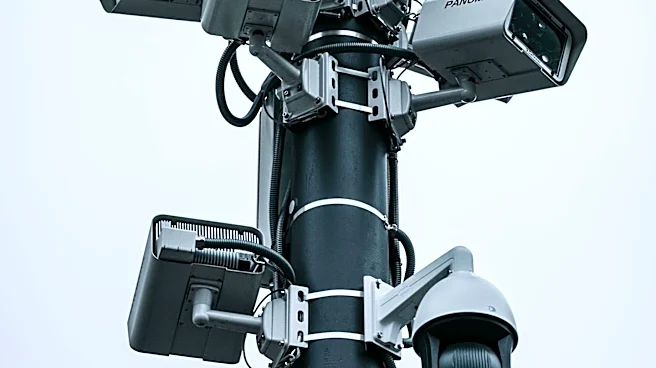
U.S. Representative Eric Burlison of Missouri has co-sponsored federal legislation, known as the 'Flock Off' Act, aimed at limiting how government entities collect and utilize data from automated license plate reader systems, such as Flock Safety cameras.
Joining Representative Thomas Massie of Kentucky, Burlison's initiative seeks to curb government access to vehicle location data gathered through these camera networks. Burlison expressed concerns that the technology allows for the collection and storage of information beyond a single image of a vehicle, potentially violating the 4th and 14th Amendments. He argues that the systems raise constitutional issues because data can be collected on individuals not suspected of any crime. The proposed legislation would prohibit law enforcement agencies from using federal funds to purchase or operate these systems, requiring agencies to dismantle existing technology if they wish to continue receiving federal funding.
Why It's Important?
This legislation is significant for its potential impact on privacy rights and the scope of government surveillance in the United States. The widespread use of automated license plate readers by law enforcement agencies across the nation has raised concerns among civil liberties advocates regarding the collection and retention of data on innocent citizens. If passed, the 'Flock Off' Act would establish federal limits on how this data is collected, retained, and accessed, potentially setting a precedent for stricter regulations on surveillance technologies. For law enforcement, the bill could necessitate a reevaluation of current investigative practices that rely on these systems, potentially impacting their ability to gather intelligence. Conversely, it could strengthen public trust by addressing concerns about overreach and protecting individual constitutional rights against unreasonable searches.
What's Next?
The 'Flock Off' Act will proceed through the legislative process, requiring debate and votes in both the House of Representatives and the Senate. Its passage would depend on gaining bipartisan support, similar to the collaboration seen between Representatives Burlison and Massie. If enacted, law enforcement agencies currently using federal funds for automated license plate readers would face a mandate to dismantle these systems or forgo future federal funding. This could lead to significant operational adjustments for many departments nationwide. The bill's progression will likely spark further public discussion and debate regarding the balance between public safety and individual privacy in the digital age, potentially influencing future legislation concerning surveillance technologies.
Beyond the Headlines
The 'Flock Off' Act delves into the deeper ethical and legal implications of pervasive surveillance technology in a democratic society. The core issue revolves around the interpretation of the Fourth Amendment in the context of digital data collection, specifically whether the continuous, non-consensual tracking of vehicle movements constitutes an 'unreasonable search.' This legislation highlights a growing tension between technological advancements that offer enhanced law enforcement capabilities and the fundamental right to privacy. Beyond the immediate impact on law enforcement funding, the bill could catalyze a broader societal conversation about data ownership, the limits of government power in the digital realm, and the long-term consequences of a 'surveillance state' on civil liberties and democratic norms. It underscores the ongoing challenge of adapting constitutional protections to rapidly evolving technological landscapes.