

What's Happening?
At COP31, global leaders are deliberating on critical strategies to address the climate crisis, with a significant focus on reducing methane emissions from livestock. In 2023, livestock emissions were estimated at 4.3 gigatonnes of carbon dioxide equivalent,
making them the largest contributor to agrifood-system based emissions. Despite the Global Methane Pledge, launched at COP26, aiming for a 30% reduction in methane emissions below 2020 levels by 2030, countries are currently off track. Livestock, including cattle, sheep, and goats, are responsible for one-third of all human-caused methane emissions. These animals are crucial for the food security and livelihoods of billions across Africa, Asia, and Latin America, regions that also report the highest livestock methane emissions globally. The ongoing extreme weather events, such as the strong El Niño forecast, exacerbate the urgency of these discussions, threatening landscapes and worsening food insecurity.
Why It's Important?
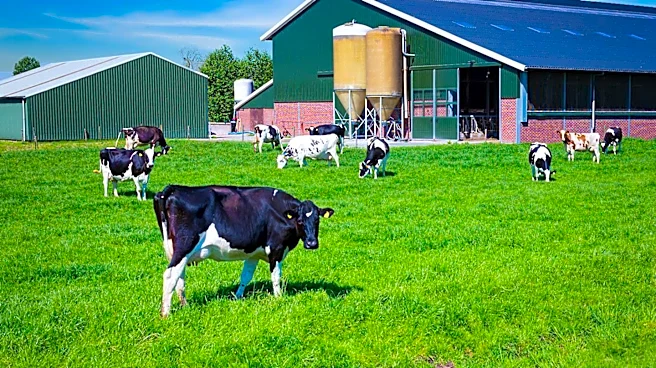
The failure to meet methane reduction targets has significant implications for global climate goals, as methane is a potent greenhouse gas with a substantial short-term warming effect. Accelerating methane reduction from livestock is identified as a critical, yet largely untapped, lever to rapidly cut global emissions and slow the pace of global warming. The impact extends beyond environmental concerns, directly affecting the resilience and sustainability of communities dependent on livestock. Healthier livestock, often achieved through sustainable pasture management and improved feeding practices, have been shown to emit less methane, offering a dual benefit of environmental protection and enhanced animal productivity. The development and scaling of AI-enabled virtual tracking tools for methane emissions and livestock productivity are crucial for achieving these reductions and boosting climate resilience in vulnerable communities.
What's Next?
As COP31 continues, there is a strong call for member countries to develop integrated landscape management approaches to achieve low-emission livestock systems. This includes implementing solutions such as sustainable natural pasture management, direct methane-reducing livestock feeding approaches, and advancements in livestock health through vaccination and parasite control. Scaling these solutions globally, particularly to the over one billion people who depend on livestock, requires significant funding, knowledge transfer, and the establishment of robust data infrastructure for monitoring. The Clean Air Task Force (CATF) emphasizes the need for the final COP31 cover decision to explicitly include agricultural emissions, providing a clear international commitment to accelerating methane reductions across all relevant sectors. This will involve implementing policies that mandate emissions reductions and strengthening international cooperation and support for developing countries.
Beyond the Headlines
The focus on livestock methane emissions at COP31 highlights a broader shift in climate policy, recognizing the interconnectedness of agricultural practices, environmental health, and global climate stability. Beyond the immediate goal of reducing emissions, these discussions underscore the potential for sustainable agricultural practices to foster greater resilience against climate hazards. The integration of technology, such as AI-enabled tracking tools, into traditional farming methods represents a significant ethical and practical challenge, requiring careful consideration of data privacy, accessibility, and equitable distribution of benefits. The emphasis on supporting vulnerable communities in Africa, Asia, and Latin America also brings to light the socio-economic dimensions of climate action, where environmental solutions must align with livelihood protection and food security. This holistic approach aims not only to mitigate climate change but also to build a more sustainable and equitable global food system.