



What's Happening?
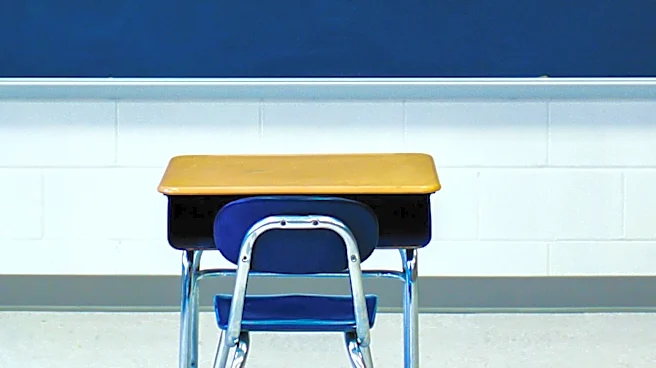
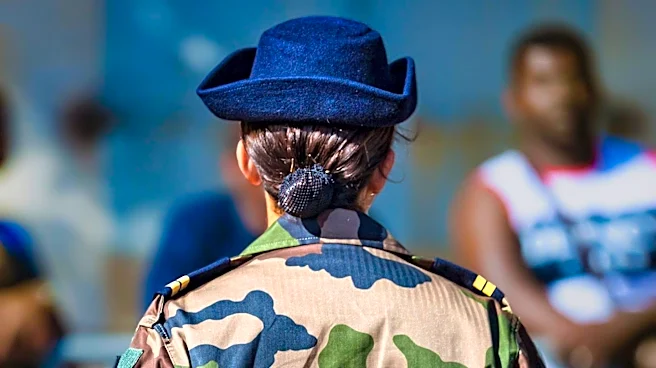
The Chadian public school system is undergoing a rehabilitation effort, initiated by President Mahamat Idriss Déby Itno's call to improve school infrastructure. In response, the Chadian army has been deployed to school grounds, replacing their usual weapons
with tools like shovels, picks, rakes, and wheelbarrows to clean and restore the facilities. This initiative aims to address the physical state of schools, with soldiers actively participating in tasks such as clearing overgrown areas and removing waste. The move highlights a shift in the army's role, demonstrating their involvement in civic duties beyond traditional military operations. While the immediate focus is on physical improvements, the broader context acknowledges deeper issues within the national education system.
Why It's Important?
This initiative is significant as it represents a direct governmental response to the state of educational infrastructure in Chad, utilizing a non-traditional resource—the military—for civilian development. While the army's involvement ensures rapid physical improvements to school environments, it also implicitly acknowledges the severe underfunding or lack of civilian capacity to undertake such widespread rehabilitation. The effort could boost morale among students and teachers by providing a cleaner, more conducive learning environment. However, the reliance on the military for such tasks also raises questions about the long-term sustainability of these improvements and the underlying systemic issues in the education sector, such as teacher motivation, curriculum quality, and overall educational standards. It underscores a national priority placed on education, even if the methods are unconventional.
What's Next?
Following the initial phase of physical rehabilitation by the army, the focus is expected to shift towards addressing the more profound challenges within the Chadian education system. This includes reviewing teacher training, improving working conditions for educators, reforming recruitment processes, and enhancing pedagogical supervision. The current clean-up is seen as a preliminary step, with calls for a more comprehensive overhaul of educational programs to ensure they are coherent and effective. Future efforts will likely involve mobilizing teachers, educational officials, and policymakers to tackle issues such as declining academic standards and teacher demotivation. The success of this broader reform will depend on sustained commitment and resources beyond the initial military-led clean-up.
Beyond the Headlines
The deployment of the Chadian army for school rehabilitation, while seemingly a positive step, reveals deeper societal and governmental dynamics. It highlights the military's pervasive role in Chadian society, extending beyond security to civic and developmental functions. This could be interpreted as a sign of a government seeking to demonstrate its commitment to public welfare through visible actions, potentially also serving to enhance the army's public image. However, it also implicitly points to the fragility of civilian institutions and the potential for militarization of public services. The long-term challenge lies in transitioning from military-led interventions to sustainable, civilian-managed solutions that address the root causes of educational decline, rather than just its symptoms. The initiative also sparks a broader conversation about the quality of education and the need for systemic reform to truly uplift the nation's youth.