





What's Happening?
The MIM-104 Patriot system, originally developed in the 1960s as an anti-aircraft platform, has evolved significantly to address modern airspace threats, including ballistic missiles, low-altitude cruise missiles, and UAV swarms. The system's latest iteration,
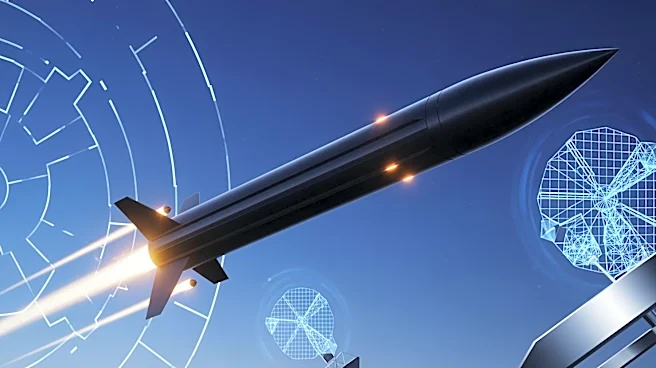
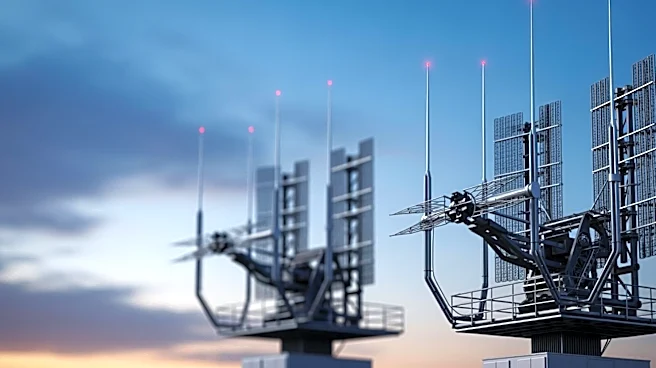
the PAC-3 MSE, represents a major advancement with its hit-to-kill technology, which replaces the older fragmentation warhead approach. This evolution has been driven by the need to counter increasingly sophisticated threats, such as hypersonic missiles. The PAC-3 MSE's design includes a two-stage thrust management system and extended fins for enhanced maneuverability, allowing it to engage targets at high altitudes and long ranges. The system's radar, the AN/MPQ-65, employs phased array technology for precise target tracking and guidance, making it a critical component of integrated air and missile defense strategies.
Why It's Important?
The advancements in the Patriot system are crucial for maintaining effective defense capabilities against evolving threats. The shift to hit-to-kill technology enhances the system's precision and effectiveness, reducing the risk of collateral damage from missile interceptions. This is particularly important in the context of modern warfare, where adversaries employ advanced tactics such as saturation attacks and electronic warfare. The Patriot system's ability to integrate with other defense systems, such as the LTAMDS and IBCS, further strengthens its role in a multi-layered defense architecture. This integration allows for more flexible and responsive defense strategies, which are essential for protecting national security interests and maintaining military superiority.
What's Next?
The future of the Patriot system involves continued integration with emerging technologies and defense networks. The development of the LTAMDS and IBCS will enhance the system's detection and engagement capabilities, providing 360-degree coverage and enabling data sharing across platforms. This will allow the Patriot system to operate more effectively in complex threat environments. Additionally, addressing the cost and sustainability challenges associated with the system's munitions will be critical for ensuring its long-term viability. As adversaries continue to develop new missile technologies, ongoing updates and enhancements to the Patriot system will be necessary to maintain its effectiveness and reliability.
Beyond the Headlines
The evolution of the Patriot system highlights broader trends in military technology and defense strategy. The emphasis on precision and integration reflects a shift towards more networked and agile defense systems capable of responding to diverse threats. This approach also underscores the importance of technological innovation in maintaining strategic advantages. The challenges associated with cost and sustainability, however, point to the need for balanced investment in defense capabilities. As the Patriot system continues to evolve, it will play a key role in shaping the future of air and missile defense, influencing both military tactics and defense policy.