
What's Happening?
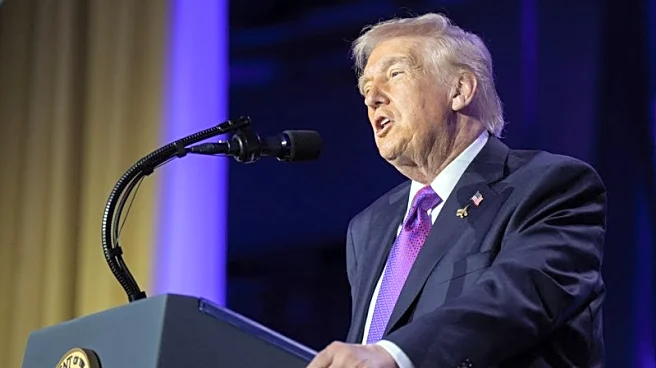
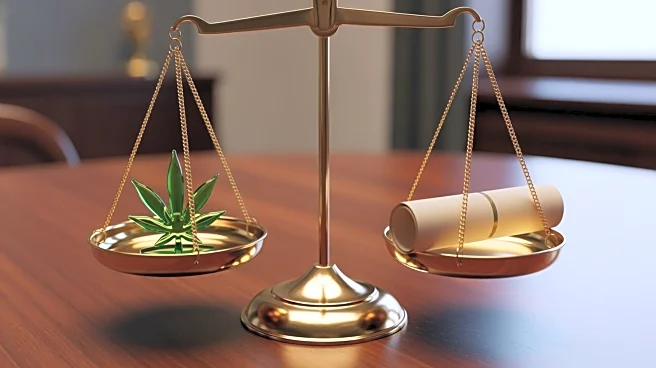
President Donald Trump is reportedly preparing to issue an executive order aimed at reclassifying marijuana from a Schedule I to a Schedule III substance. This move would significantly reduce federal restrictions
on marijuana, aligning its oversight with that of certain prescription painkillers. The reclassification would not legalize or decriminalize marijuana but would facilitate research and potentially benefit legal businesses in the industry. Discussions about this initiative involved a phone call between President Trump and House Speaker Mike Johnson, along with marijuana industry executives and health officials. While Johnson expressed skepticism, citing studies against reclassification, industry representatives countered his arguments. Although the plan is not finalized, it represents a continuation of efforts initiated under President Joe Biden's administration, which had proposed similar reclassification measures that stalled after Trump took office.
Why It's Important?
The reclassification of marijuana could mark a significant shift in federal cannabis policy, potentially the most substantial since the 1970s when marijuana was classified as a Schedule I drug. This change could ease barriers to research and development, benefiting the burgeoning marijuana industry, which is already worth billions in the U.S. It could also influence public policy by aligning federal regulations more closely with state laws, as many states have already legalized medical and recreational marijuana. The move could garner bipartisan support, as both Democrats and Republicans have shown interest in reclassification due to marijuana's medical potential and its popularity among voters. However, the decision could also face opposition from those concerned about the drug's impact on public health.
What's Next?
If President Trump proceeds with the executive order, federal agencies would be directed to pursue the reclassification of marijuana. This could involve the Justice Department issuing a final rule, bypassing a pending administrative court hearing. The Drug Enforcement Administration (DEA), which has been slow to act on previous recommendations, would play a crucial role in implementing the reclassification. The outcome could prompt reactions from various stakeholders, including political leaders, health officials, and the marijuana industry. The decision could also influence future legislative efforts and potentially lead to further reforms in federal cannabis policy.