





What's Happening?
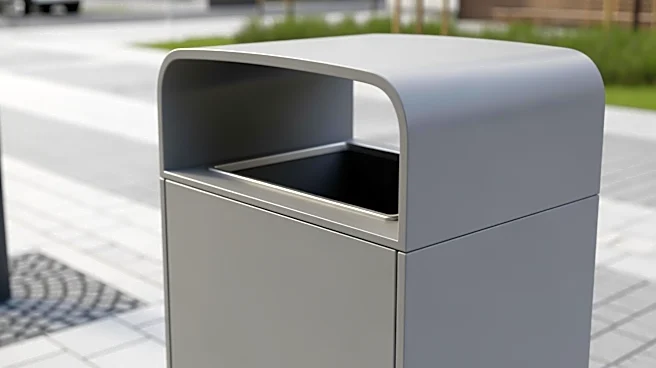
Mayor Zohran Mamdani has announced the expansion of the Empire Bin Initiative, a program initially launched under the Eric Adams administration, aimed at reducing trash bags on New York City sidewalks. The initiative will extend to six additional districts,
bringing stationary garbage bins to 25,000 residences in larger buildings across the city. This expansion is part of a broader effort to improve waste management and curb rat sightings, which have reportedly decreased since the program's inception. The neighborhoods included in this phase are Prospect Heights, Crown Heights, Hunts Point, West Village, SoHo, Sunnyside, and Hunters Point. The program requires higher-density buildings to use stationary bins for trash collection, facilitating easier pickup by side-loading trucks. The expansion is expected to be operational by the end of 2027.
Why It's Important?
The expansion of the Empire Bin Initiative is significant for New York City as it addresses persistent issues of waste management and public cleanliness. By reducing the number of trash bags on sidewalks, the program aims to improve the city's aesthetic appeal and public health by minimizing rat infestations. The initiative also reflects a commitment to maintaining essential services despite a projected $5.4 billion budget shortfall. The program's success could serve as a model for other urban areas facing similar challenges. Additionally, the initiative aligns with broader environmental goals by promoting cleaner streets and potentially reducing waste-related pollution.
What's Next?
The next phase of the Empire Bin Initiative will require substantial investment, adding over $50 million to the city's budget. Mayor Mamdani has indicated that the city will continue to prioritize essential services while addressing the budget gap. The administration is also considering revenue-generating measures, such as the pied-à-terre tax proposed by Governor Kathy Hochul, which could generate $500 million annually. As the program expands, city officials will likely monitor its impact on waste management and public satisfaction, adjusting strategies as needed to ensure successful implementation.