
What's Happening?
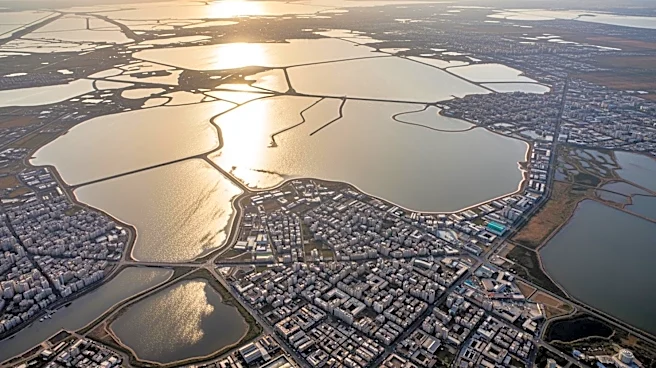
A study conducted by Utah State University researchers reveals that farmers in the Great Salt Lake Basin attribute the pressure on water resources to rapid urban growth rather than agricultural practices.
The study, published in the Journal of Rural Studies, involved interviews with farmers from various watersheds, who expressed concerns about the impact of population growth and development on water availability. Despite agriculture being a major water user, farmers feel they are unfairly blamed for the lake's declining levels. The study emphasizes the need for broader discussions about development and long-term water demand to address the region's challenges.
Why It's Important?
The study's findings highlight the need for integrated water management strategies that consider both urban and agricultural needs. As Utah's population continues to grow, the demand for water resources increases, affecting natural bodies like the Great Salt Lake. This situation calls for policy changes that balance development with environmental sustainability. By involving farmers in conservation policy discussions, stakeholders can work towards solutions that address water resource challenges while supporting agricultural viability. The study suggests that successful restoration efforts will require collaboration between farmers and policymakers.
What's Next?
Policymakers may need to engage in broader discussions about development priorities and water management strategies to create sustainable solutions. As Utah's population is projected to grow significantly, stakeholders must address the challenges posed by urban expansion and its impact on water resources. Future efforts to restore the Great Salt Lake will likely involve agricultural conservation measures and discussions about development priorities. Involving farmers in shaping conservation policies could lead to more effective strategies that balance environmental and economic needs.